Wolf: Shadow of the Forest
In the moonlit wilderness of forests, tundras, and mountains across the Northern Hemisphere, the wolf (*Canis lupus*) commands the night with its legendary howl—a haunting, harmonious chorus that binds packs, claims territory, and sends shivers through the wild. On BirdAnimalSound, immerse yourself in the wolf’s rich vocal symphony: from long-distance howls that carry for miles to playful yips, fierce growls, and tender whines that reveal deep social bonds. More than just a predator, the wolf is a master of cooperation and endurance, its voice weaving tales of loyalty, survival, and untamed spirit that echo through generations.
Fun Facts
– Howls aren’t just for scaring—wolves use different pitches and tones like a family song to identify each other, even from miles away.
– Super sniffers: A wolf’s sense of smell is 100 times stronger than a human’s, detecting prey up to 2 miles downwind.
– Marathon runners: Wolves can trot at 10-15 mph for hours or sprint up to 40 mph in pursuit.
– Pack diners: They devour up to 20 pounds of meat in one meal, then fast for days—perfect for feast-or-famine life.
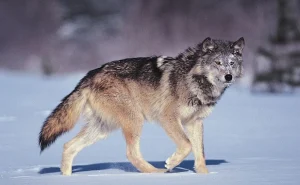
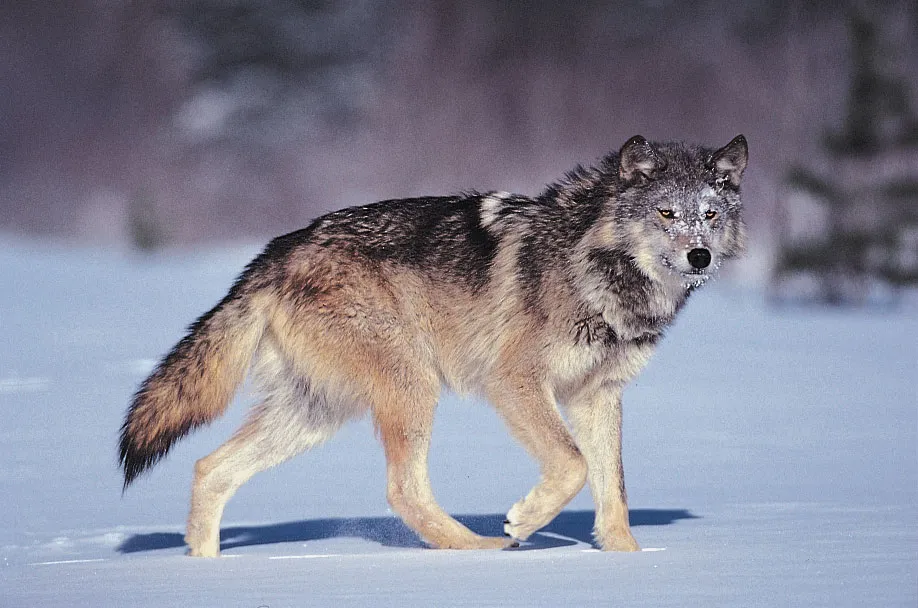
– Color variety: Beyond classic gray, wolves come in black, white, brown, or even reddish hues depending on region.
– Playful adults: Wolves love roughhousing and chasing each other, keeping pack bonds strong through lifelong games.
– Territory markers: They “scent-roll” in strong smells (like carrion) to carry messages back to the pack.
Scientific Info
– Scientific name: *Canis lupus*—closest relative to domestic dogs.
– Largest wild canid: Males average 80-150 lbs, up to 6 feet long (including tail); Arctic wolves are often biggest.
– Subspecies: Around 30-40 recognized, including gray wolf, Arctic wolf, timber wolf, and Mexican gray wolf.
– Status: Varies by region—some populations recovering, others endangered; global numbers ~200,000-300,000 in the wild.
– Adaptations: Thick double coat for extreme cold, large paws as natural snowshoes, powerful jaws with 42 teeth and 1,200 lbs bite pressure.
– Lifespan: 6-8 years in wild (up to 16 in captivity).
Habits & Behavior
– Highly social: Live in tight-knit family packs of 5-12, led by an alpha breeding pair; cooperation is key to survival.
– Territorial: Defend ranges up to 1,000 square miles with howls, scent marking, and patrols.
– Cooperative hunters: Use strategy and teamwork to take down large prey like elk, moose, or bison—chasing for miles to exhaust targets.
– Communication masters: Rich vocal language (howls, barks, growls, whines) plus body language, facial expressions, and scent for nuanced pack interactions.
– Family-focused: Only alpha pair usually breeds; entire pack helps raise pups with food regurgitation and protection.
– Seasonal nomads: Follow migrating prey; in winter, packs tighten formation for warmth and hunting efficiency.
– Misunderstood scavengers: While skilled hunters, they readily clean up carrion, playing vital roles in ecosystem balance.