Indian Golden Oriole – Beautiful Yellow Bird of Forests
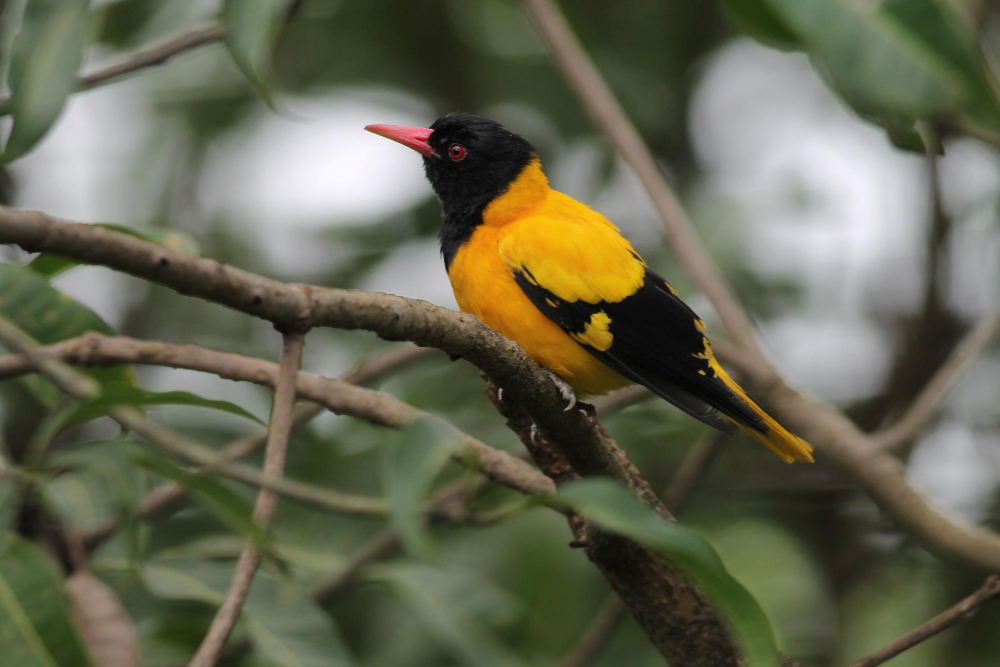
The Indian Golden Oriole is one of South Asia’s most striking and musical birds. With its brilliant yellow body and contrasting black wings, this bird is often heard before it is seen. Hidden among leafy canopies, the oriole fills forests, gardens, and countryside with its rich, flute-like calls. Graceful, shy, and beautifully vocal, it is a favorite among bird lovers and nature enthusiasts.
Fun Facts
- Hard to spot, easy to hear: The Indian Golden Oriole often stays high in trees, making its beautiful song the best way to locate it.
- A natural musician: Its call sounds like a soft whistle or flute, often described as one of the sweetest bird songs in the region.
- Seasonal visitor: In many areas, it appears more frequently during the warmer months as a breeding migrant.
- Color difference: Males are bright golden yellow with black wings, while females are more greenish-yellow for better camouflage.
- Cultural bird: This bird is mentioned in South Asian poetry and folklore because of its voice and beauty.
Scientific Information
- Common Name: Indian Golden Oriole
- Scientific Name: Oriolus kundoo
- Family: Oriolidae
- Order: Passeriformes
- Size: About 23–25 cm in length
- Wingspan: Approximately 40–45 cm
- Diet: Omnivorous – feeds on fruits, insects, caterpillars, and small invertebrates
- Habitat: Open woodlands, forests, orchards, gardens, and rural areas
- Geographic Range: Indian subcontinent, parts of Central and Southeast Asia
Habits & Behavior
- Feeding Style: The Indian Golden Oriole is an active forager, moving quickly through tree branches in search of insects and ripe fruits. It helps control pests by eating harmful caterpillars.
- Song & Communication: Males use their clear, melodious calls to attract mates and defend territory. Their voice is strongest during early morning and breeding season.
- Nesting: The female builds a hanging, cup-shaped nest suspended between branches using grass, fibers, and leaves. This design helps protect eggs from predators.
- Temperament: Shy and alert, this bird avoids human attention and prefers staying within dense foliage.
- Movement: Some populations are migratory, moving seasonally in search of suitable breeding and feeding grounds.