Great Reed Warbler: Facts, Habits & Scientific Information
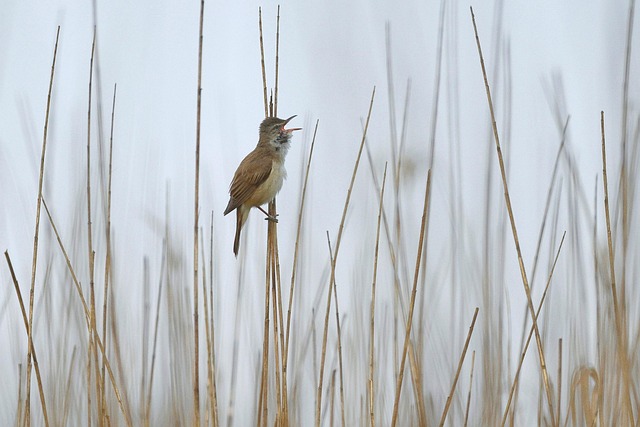
The Great Reed Warbler (Acrocephalus arundinaceus) is a striking and powerful songbird commonly found in wetlands, reed beds, and marshes across Europe, Asia, and parts of Africa. Known for its loud, melodious, and repetitive song, this bird is a true master of communication in dense reeds, making it one of the most noticeable birds in its habitat. Its robust presence and energetic calls make it a favorite for bird watchers and nature enthusiasts alike.
Fun Facts
- The Great Reed Warbler is one of the loudest songbirds in Europe.
- Its song can carry over 100 meters through dense reed beds.
- Male warblers are highly territorial and will sing continuously to defend their area.
- They are excellent fliers, migrating thousands of kilometers between Europe and Africa.
- The bird’s diet mainly includes insects and small invertebrates, making it an important part of wetland ecosystems.
- Females carefully weave cup-shaped nests hidden among reeds above water.
Scientific Information
- Common Name: Great Reed Warbler
- Scientific Name: Acrocephalus arundinaceus
- Family: Acrocephalidae
- Order: Passeriformes
- Class: Aves
- Habitat: Wetlands, reed beds, marshes
- Diet: Insects, spiders, small invertebrates
- Lifespan: 5–10 years in the wild
Habits & Behavior
- Male Great Reed Warblers sing loudly from reed tops to attract females and ward off rivals.
- They are highly territorial, often engaging in vocal duels with neighboring males.
- These birds are migratory, traveling long distances from breeding grounds in Europe to wintering areas in Africa.
- Nesting takes place close to water, hidden among tall reeds to avoid predators.
- The species is insectivorous, feeding mostly at dawn and dusk when insects are abundant.
- During migration, they fly at night and navigate using stars and landmarks.