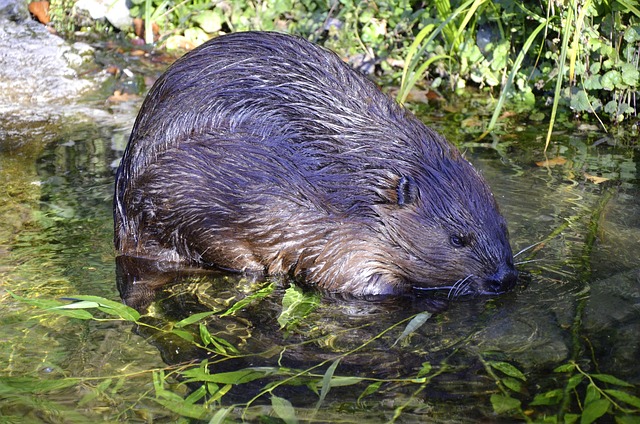
Beaver: Nature’s Master Builder and the Architect of Wetlands
The beaver is one of the most fascinating engineers in the animal kingdom, famous for its ability to transform landscapes by building dams and lodges. With powerful teeth, a flat paddle-shaped tail, and an instinct for construction, this hardworking mammal plays a vital role in maintaining healthy ecosystems. By creating wetlands, beavers provide habitats for countless other species, making them true environmental heroes.
Often active during the evening and night, beavers are excellent swimmers and spend much of their lives in and around freshwater rivers, lakes, and ponds. Their intelligence, teamwork, and persistence have earned them a reputation as one of nature’s most remarkable builders.
Scientific Information
- Common Name: Beaver
- Scientific Name: Castor canadensis (North American Beaver), Castor fiber (Eurasian Beaver)
- Family: Castoridae
- Order: Rodentia
- Class: Mammalia
- Average Length: 74–90 cm (29–35 inches), excluding tail
- Tail Length: 20–30 cm (8–12 inches)
- Weight: 11–32 kg (24–70 lbs)
- Lifespan: Typically 10–12 years in the wild
Conservation Status:
- North American Beaver – Least Concern
- Eurasian Beaver – Least Concern (population recovering in many regions)
National Recognition:
✅ The North American Beaver is the official national animal of Canada, symbolizing perseverance, hard work, and the country’s rich wildlife heritage.
Fun Facts
✅ Beaver teeth never stop growing, and their orange color comes from iron-rich enamel that makes them incredibly strong.
✅ A beaver can fell a medium-sized tree in just a few hours using its powerful jaws.
✅ Their dams can be massive — some stretch over 800 meters (2,600 feet) and are even visible from space!
✅ The flat tail works like a rudder while swimming and can slap the water loudly to warn others of danger.
✅ Beavers have transparent eyelids that allow them to see underwater.
✅ Their dam-building helps reduce flooding and improves water quality naturally.
Habits & Behavior
Diet:
Beavers are herbivores. They mainly eat tree bark, twigs, aquatic plants, leaves, and roots. Aspen and willow are among their favorite foods.
Building Behavior:
Known as ecosystem engineers, beavers construct dams to create deep ponds where they build dome-shaped lodges with underwater entrances for protection from predators.
Social Life:
Beavers are highly social and live in family groups typically made up of a breeding pair and their offspring.
Activity Pattern:
They are mostly nocturnal, meaning they are most active at night.
Habitat:
Freshwater environments such as rivers, streams, marshes, and lakes are ideal for beavers.
Communication:
Besides tail-slapping, beavers communicate through scent markings to establish territory.