Marten: The Agile Phantom of the Forest Canopy
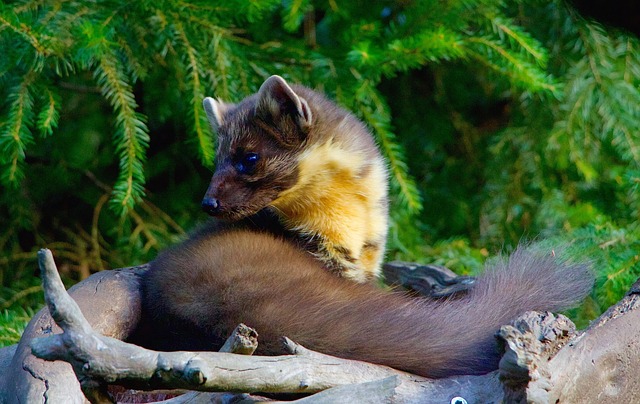
Quiet, curious, and incredibly agile, the marten is one of the forest’s most fascinating yet rarely seen mammals. Belonging to the weasel family, these slender predators move effortlessly through dense woodlands, often leaping from branch to branch with remarkable balance. Found across North America, Europe, and parts of Asia, martens play an important role in maintaining healthy ecosystems by controlling rodent populations. Their soft fur, sharp intelligence, and secretive nature make them a true symbol of wilderness.
Fun Facts:
- Tree Acrobats: Martens can rotate their ankles almost 180 degrees, helping them climb down trees headfirst.
- Excellent Hunters: Despite their small size, they are skilled predators that can catch fast-moving prey.
- Winter Survivors: Their thick fur keeps them warm in snowy habitats.
- Omnivorous Appetite: Martens enjoy berries and fruits in addition to small animals.
- Super Senses: They rely on sharp hearing and smell to detect prey hidden beneath snow or leaves.
Scientific Info:
- Common Name: Marten
- Scientific Genus: Martes
- Family: Mustelidae (weasel family)
- Order: Carnivora
- Average Length: 45–70 cm (18–28 inches), excluding the tail
- Weight: 0.5–2.5 kg (1–5.5 lbs), depending on the species
- Lifespan: Typically 6–10 years in the wild
- Habitat: Mature forests, coniferous woodlands, and mountainous regions
Habits & Behavior:
Martens are mostly solitary and territorial, preferring to roam large forest areas alone except during the breeding season. They are generally most active at dawn and dusk, using their stealth to avoid predators and surprise prey.
These mammals are known for their playful curiosity—young martens often chase each other and explore their surroundings like energetic kittens. When it comes to shelter, they use tree hollows, abandoned nests, or underground burrows to rest and raise their young.
Although naturally shy, martens are highly adaptable. Their ability to climb, jump long distances, and move silently through treetops makes them perfectly suited for life in dense forests. As both predator and seed spreader (through fruit consumption), martens quietly contribute to the balance and regeneration of their habitat.