Mockingbird: The Master Mimic of Nature’s Symphony
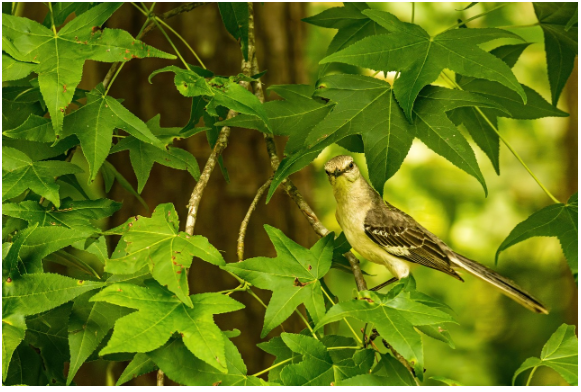
The Mockingbird is one of nature’s most talented vocalists, celebrated for its extraordinary ability to imitate the songs of other birds and even everyday sounds from its surroundings. With a sleek body, soft gray feathers, and flashes of white on its wings, this intelligent bird brings life and music to gardens, forests, and open landscapes. Beyond its beautiful voice, the mockingbird is admired for its bold personality and strong protective instincts, making it a fascinating species for bird lovers around the world.
Fun Facts:
- Song Expert: A single mockingbird can learn and repeat over 150–200 different sounds during its lifetime.
- Night Singer: Unmated males often sing through the night to attract a partner.
- Fearless Defender: Mockingbirds aggressively protect their nests, sometimes chasing away much larger animals.
- Repeat Performer: They often repeat each phrase several times before switching to a new sound.
- Highly Intelligent: Mockingbirds can recognize individual humans who come too close to their nests.
Scientific Info:
- Common Name: Mockingbird
- Most Well-Known Species: Northern Mockingbird
- Scientific Name: Mimus polyglottos (“many-tongued mimic”)
- Family: Mimidae
- Order: Passeriformes (perching birds)
- Average Length: 20–28 cm (8–11 inches)
- Wingspan: 31–38 cm (12–15 inches)
- Weight: 40–58 grams
- Lifespan: Typically up to 8 years in the wild
- Habitat: Open woodlands, parks, suburban areas, farmlands, and gardens
National & Cultural Recognition:
The Northern Mockingbird is the official state bird of five U.S. states — Texas, Florida, Mississippi, Tennessee, and Arkansas. While it is not the national bird of a country, this widespread recognition highlights its cultural importance and popularity.
Habits & Behavior:
Mockingbirds are active, alert, and highly adaptable birds that thrive in both natural and urban environments. They are mostly diurnal (active during the day) but may sing at night during breeding season.
These birds are omnivorous, feeding on insects, worms, and spiders in warmer months, while switching to berries and fruits when food is scarce. This flexible diet helps them survive in a wide range of climates.
Known for their territorial nature, mockingbirds carefully guard their nesting areas. Both parents participate in raising the chicks, demonstrating strong family cooperation. Their constant singing is not just for beauty—it plays a crucial role in attracting mates and warning rivals to stay away.
With unmatched vocal talent and remarkable adaptability, the mockingbird stands as a true performer of the natural world, filling its habitat with an ever-changing melody.