Double-crested Cormorant – The Master Diver of North American Waters
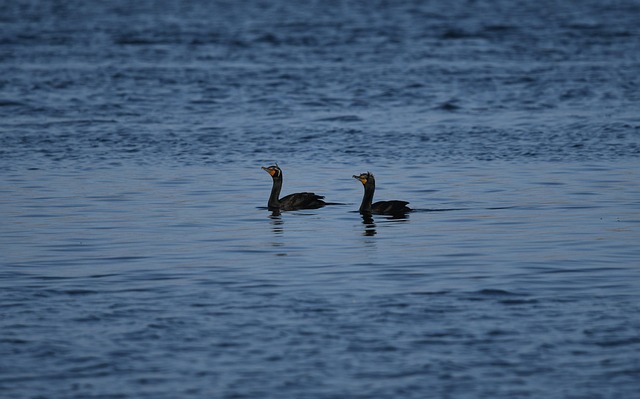
The Double-crested Cormorant is a striking and highly skilled waterbird known for its remarkable diving ability and distinctive posture. Often seen perched with wings spread wide to dry, this bird is a familiar sight near lakes, rivers, wetlands, and coastal shorelines across North America. With its sleek dark body, piercing turquoise eyes, and agile hunting techniques, the Double-crested Cormorant plays an important role in aquatic ecosystems.
Fun Facts
- Double-crested Cormorants are expert underwater hunters capable of chasing fish with impressive speed and precision.
- Unlike many waterbirds, their feathers are not fully waterproof, which is why they frequently spread their wings to dry.
- During the breeding season, adults develop small tufts of feathers (the “double crests”) on their heads.
- These birds can dive to significant depths and remain submerged for surprisingly long periods.
- They are highly social and often nest in large colonies alongside other waterbirds.
Scientific Info
- Common Name: Double-crested Cormorant
- Scientific Name: Nannopterum auritum
- Family: Phalacrocoracidae
- Size: Approximately 70–90 cm (28–35 inches) in length
- Wingspan: Around 115–140 cm (45–55 inches)
- Diet: Primarily fish, but also aquatic invertebrates and small amphibians
- Habitat: Freshwater lakes, rivers, marshes, reservoirs, and coastal areas
- Range: Widely distributed across North America
Habits & Behavior
Double-crested Cormorants are powerful swimmers and agile divers, using their webbed feet to propel themselves underwater while hunting. They typically dive from the water’s surface and capture prey with their hooked bills. After feeding, they often perch on rocks, docks, or branches, spreading their wings in a characteristic drying posture.
These birds are colonial nesters, forming large breeding groups on islands, cliffs, or trees near water. Both parents participate in raising the chicks, sharing responsibilities such as incubation and feeding. Despite their somewhat prehistoric appearance, Double-crested Cormorants are highly adaptable and thrive in a variety of aquatic environments.