Grey Crowned Crane – The Golden-Crested Royal Bird of Africa
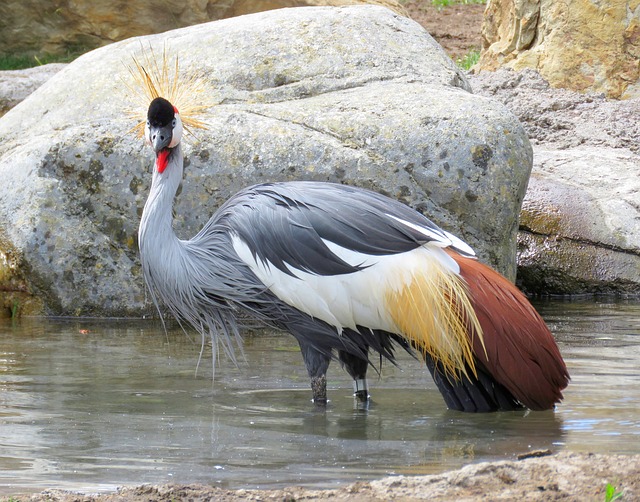
The Grey Crowned Crane is one of Africa’s most elegant and iconic birds. With its radiant golden crown of stiff feathers, graceful movements, and striking black, white, and red facial markings, this crane truly looks like royalty of the wetlands. Found across eastern and southern Africa, it is admired not only for its beauty but also for its cultural significance and symbolic value.
This magnificent bird is proudly the national bird of Uganda, and it even appears on the country’s national flag and coat of arms — a symbol of peace, grace, and prosperity.
Scientific Information
- Scientific Name: Balearica regulorum
- Family: Gruidae
- Order: Gruiformes
- Common Names: Grey Crowned Crane, African Crowned Crane
- Length: 100–110 cm (39–43 inches)
- Wingspan: 180–200 cm (6–6.5 feet)
- Weight: 3–4 kg
- Habitat: Wetlands, grasslands, savannas, and agricultural fields
- Diet: Omnivorous – seeds, insects, frogs, small reptiles, and grains
- Conservation Status: Endangered (IUCN Red List)
There are two recognized subspecies:
- East African Grey Crowned Crane
- South African Grey Crowned Crane
Fun Facts
- Its golden “crown” is made of stiff, golden feathers that stand upright like a royal headdress.
- Grey Crowned Cranes are famous for their energetic and graceful courtship dances.
- Unlike most cranes, they can perch in trees thanks to their long hind toe.
- It is the national bird of Uganda and symbolizes peace and gentleness.
- Their loud, trumpeting calls can be heard across long distances in open wetlands.
Habits & Behavior
Courtship Dance
One of the most fascinating behaviors of the Grey Crowned Crane is its elaborate courtship dance. Males and females both participate in bowing, jumping, wing-flapping, and tossing grass into the air. These dances strengthen pair bonds and may occur year-round.
Nesting
They build large nests made of grasses and vegetation in wetlands or marshy areas. The female typically lays 2–5 eggs, and both parents share incubation duties.
Feeding Behavior
Grey Crowned Cranes are opportunistic feeders. They often forage in pairs or small groups, walking slowly through grasslands while pecking at insects, seeds, and small animals.
Social Structure
They are social birds, often seen in flocks outside the breeding season. During breeding, they become territorial and defend their nesting areas.
Unique Perching Ability
Unlike most crane species, Grey Crowned Cranes have a long hind toe that allows them to perch in trees, especially at night for safety.
Conservation Note
Due to habitat loss, wetland drainage, illegal trade, and human disturbance, Grey Crowned Crane populations are declining. Conservation efforts are underway in several African countries to protect wetlands and reduce illegal capture.
The Grey Crowned Crane stands as a symbol of beauty, elegance, and African heritage. With its golden crown and graceful dance, it truly deserves its royal title among the birds of Africa.