Common Loon – The Mysterious Voice of Northern Lakes
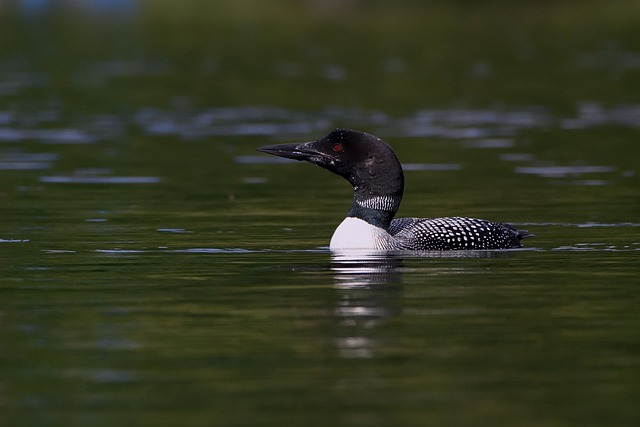
The Common Loon is one of the most iconic and hauntingly beautiful water birds of North America. Known for its striking black-and-white plumage and unforgettable, echoing calls across quiet lakes, this bird symbolizes wilderness and tranquility. Often seen gliding gracefully on clear freshwater lakes, the Common Loon is an expert diver and a powerful swimmer. Its haunting voice at dusk and dawn has inspired nature lovers, photographers, and birdwatchers for generations.
This remarkable bird spends much of its life on water and rarely comes to land except for nesting. With sharp red eyes, a dagger-like bill, and elegant posture, the Common Loon is both mysterious and captivating.
Fun Facts
- The Common Loon can dive as deep as 60 meters (200 feet) in search of fish.
- Its eerie calls include wails, yodels, tremolos, and hoots, each used for different communication purposes.
- Unlike many birds, loons have solid bones instead of hollow ones, helping them dive deeper underwater.
- The haunting sound of loons is often used in movies and documentaries to represent remote wilderness.
- During winter, Common Loons migrate from northern lakes to coastal ocean waters.
- They are the official state bird of the U.S. state of Minnesota.
Scientific Information
- Scientific Name: Gavia immer
- Family: Gaviidae
- Order: Gaviiformes
- Average Length: 66–91 cm (26–36 inches)
- Wingspan: 127–147 cm (50–58 inches)
- Weight: 2.2–6.4 kg
- Diet: Mainly fish, but also crustaceans, insects, and small aquatic animals
- Habitat: Freshwater lakes during breeding season and coastal marine waters during winter
Habits & Behavior
Common Loons are exceptional divers and skilled hunters. They use their powerful legs, positioned far back on their bodies, to propel themselves underwater with great speed. While this makes them excellent swimmers, it also means they are awkward walkers on land.
These birds are highly territorial during the breeding season. Pairs defend their lake territories using loud and distinctive calls. Their nests are usually built close to the water’s edge, allowing them easy access to escape predators.
Common Loons are also known for their strong pair bonds, with many pairs returning to the same lake year after year to breed. Parents actively care for their chicks, and young chicks are often seen riding on their parents’ backs for warmth and protection.
During migration, they travel long distances from northern lakes to coastal regions, where they spend the winter months before returning to breeding lakes in spring.