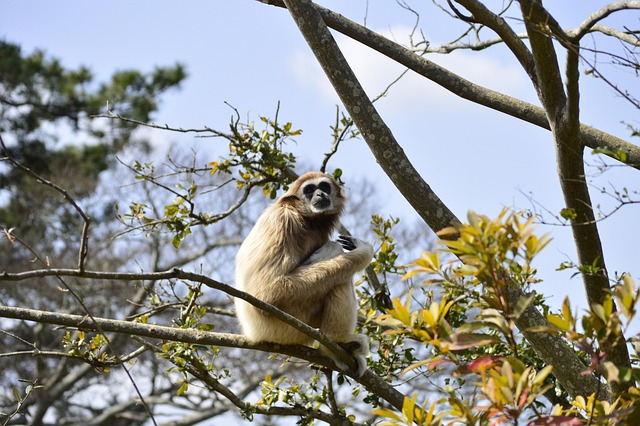
Lar Gibbon: The Graceful Acrobat of the Rainforest Canopy
The Lar Gibbon is one of the most enchanting primates found in the lush tropical forests of Southeast Asia. Known for its incredible agility and melodic calls, this small ape spends most of its life high in the treetops. With its long arms and expressive face framed by white fur, the Lar Gibbon is a true symbol of forest harmony and balance. Watching them swing effortlessly from branch to branch feels like witnessing nature’s own aerial ballet.
Fun Facts
- Lar Gibbons are also called “white-handed gibbons” because of their distinct pale hands and feet.
- They are among the best brachiators (tree swingers) in the animal kingdom—capable of moving at speeds up to 55 km/h through the canopy!
- These gibbons form strong monogamous pairs, often staying with one partner for life.
- Their loud, beautiful songs can be heard up to 1–2 kilometers away in the forest.
- Unlike many primates, they rarely come down to the ground.
Scientific Information
- Scientific Name: Hylobates lar
- Common Name: Lar Gibbon / White-handed Gibbon
- Family: Hylobatidae
- Order: Primates
- Class: Mammalia
- Diet: Omnivorous (mainly fruits, leaves, flowers, and occasional insects)
- Lifespan: Around 25–30 years in the wild
- Habitat: Tropical rainforests of Thailand, Malaysia, Indonesia, and nearby regions
Habits & Behavior
Lar Gibbons are highly adapted to life in the treetops. Their long arms—often longer than their legs—allow them to swing effortlessly between branches, a movement known as brachiation. This unique form of locomotion helps them travel long distances quickly while avoiding predators.
They are diurnal, meaning they are active during the day and rest at night. A typical day involves feeding, grooming, and social bonding. These gibbons live in small family groups, usually consisting of a mated pair and their offspring.
One of their most fascinating behaviors is their territorial singing. Mated pairs perform coordinated duets each morning to mark their territory and strengthen their bond. These vocalizations are complex, musical, and essential for communication in dense forests.
Lar Gibbons are also known for their strong social structure and parenting. Both parents take part in raising their young, teaching them survival skills such as swinging and foraging.