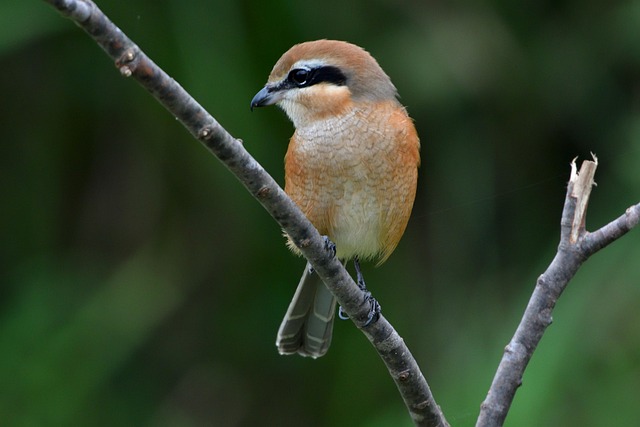
Shrike: The Fearless Songbird Known as the “Butcher Bird”
The Shrike is one of the most fascinating and unique songbirds in the world. Although it belongs to the group of perching birds, the shrike behaves more like a small bird of prey. Known for its hooked beak, sharp hunting skills, and remarkable food-storing habits, the shrike has earned the nickname “Butcher Bird.” Found across Europe, Asia, Africa, and North America, shrikes inhabit open grasslands, scrublands, farmlands, and semi-arid regions. Their striking appearance, bold personality, and predatory behavior make them stand out among songbirds.
Fun Facts
- Shrikes are called “Butcher Birds” because they often impale prey on thorns, barbed wire, or sharp branches.
- Despite being songbirds, they hunt insects, lizards, rodents, and even small birds.
- Shrikes have a hooked beak similar to that of hawks and falcons.
- They store excess food by hanging it on spikes or thorns for later consumption.
- Some shrike species can mimic the calls of other birds.
- Shrikes are highly territorial and aggressively defend their hunting grounds.
- They often hunt from exposed perches, scanning the ground for prey.
- Their unique hunting strategy allows them to tackle prey larger than themselves.
Scientific Information
Common Name: Shrike
Family: Laniidae
Order: Passeriformes
Class: Aves
Diet: Carnivorous (insects, spiders, lizards, rodents, small birds)
Average Length: 16–26 cm (6–10 inches)
Average Weight: 25–80 grams
Wingspan: 24–38 cm
Lifespan: 4–10 years in the wild
Habitat: Grasslands, shrublands, open woodlands, farmlands, and semi-arid regions
Distribution: Europe, Asia, Africa, and North America
Habits & Behavior
Shrikes are solitary and highly territorial birds that spend much of their day perched in elevated locations, watching for potential prey. Their excellent eyesight allows them to spot insects and small animals from considerable distances.
Unlike most songbirds, shrikes are active predators. After capturing prey with their beaks, they often impale it on thorns, cactus spines, or barbed wire. This behavior helps them tear apart food and store extra meals for future use.
During the breeding season, shrikes establish territories and perform display flights to attract mates. They build cup-shaped nests in shrubs or small trees, where both parents help care for the young.
Although they possess strong predatory instincts, shrikes are also capable singers. Many species produce a variety of calls, whistles, and mimicry sounds that are used for communication and territory defense.
Their combination of songbird characteristics and raptor-like hunting behavior makes shrikes among the most unusual and intriguing birds in the avian world. Whether perched on a fence post or hunting across open countryside, shrikes demonstrate remarkable intelligence, adaptability, and survival skills.