Sunbird: The Dazzling Nectar Lover of Tropical Gardens
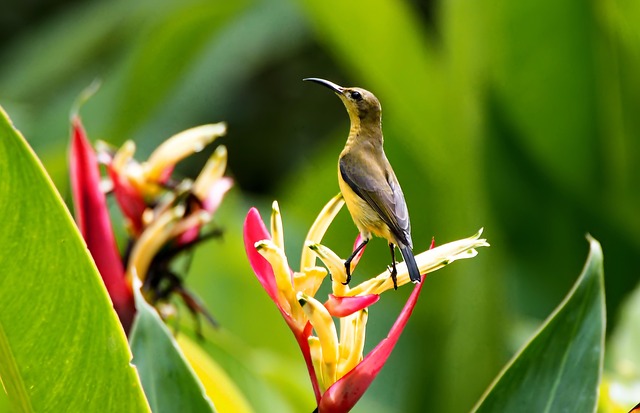
Sunbirds are among the most colorful and captivating birds found in the tropical regions of Africa, Asia, and Australia. Known for their brilliant iridescent feathers and slender, curved bills, these tiny birds are often compared to hummingbirds because of their nectar-feeding habits. Sunbirds play a vital role in pollinating flowers while searching for nectar, making them important contributors to healthy ecosystems. Their vibrant colors, energetic movements, and cheerful calls make them a favorite among birdwatchers and nature enthusiasts alike.
Fun Facts
- Sunbirds are often called the “Old World counterparts” of hummingbirds.
- Their feathers can shimmer with metallic shades of green, blue, purple, and red.
- Unlike hummingbirds, most sunbirds usually perch while feeding rather than hover.
- Sunbirds help pollinate many tropical flowering plants.
- Some species build elaborate hanging nests suspended from branches.
- Their long, curved bills are perfectly adapted for reaching deep into flowers.
- Male sunbirds are usually much more colorful than females.
- Despite their tiny size, they are highly territorial around food sources.
Scientific Information
Common Name: Sunbird
Family: Nectariniidae
Order: Passeriformes
Class: Aves
Diet: Nectar, insects, spiders, fruits, and small arthropods
Average Length: 8–20 cm (3–8 inches)
Average Weight: 5–45 grams
Wingspan: 10–25 cm
Lifespan: 3–10 years in the wild
Habitat: Tropical forests, woodlands, gardens, mangroves, scrublands, and plantations
Distribution: Africa, South Asia, Southeast Asia, and northern Australia
Habits & Behavior
Sunbirds are active and agile birds that spend much of their day visiting flowers in search of nectar. Their specialized curved bills and brush-tipped tongues allow them to efficiently extract nectar from a wide variety of blossoms. While nectar is their primary food source, they also consume insects and spiders, which provide essential protein.
These birds are highly energetic and often move rapidly between flowers and feeding sites. Although they can hover briefly, most species prefer to perch while feeding. Their territorial nature means they may aggressively defend rich nectar sources from other birds.
During the breeding season, female sunbirds typically build delicate, pouch-shaped nests using grass, leaves, spider webs, and plant fibers. These nests are often suspended from branches and hidden among foliage for protection.
Sunbirds communicate through a variety of chirps, whistles, and calls. Males often display their brilliant plumage during courtship, performing aerial displays and singing to attract mates.
Their dazzling colors, ecological importance as pollinators, and fascinating behavior make sunbirds some of the most beautiful and admired songbirds in tropical ecosystems around the world.