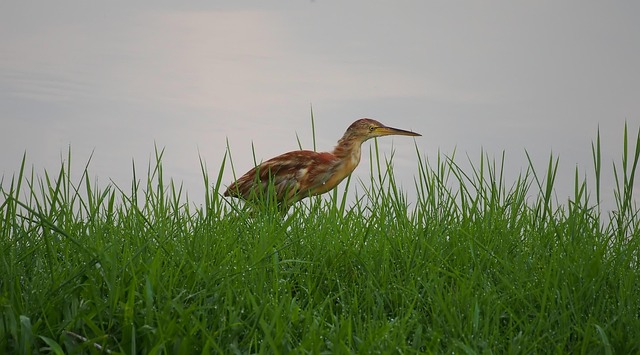
Bittern: The Silent Master of the Marshlands
The Bittern is one of the most mysterious and well-camouflaged wetland birds in the world. Belonging to the heron family, it is famous for its ability to hide perfectly among reeds and marsh vegetation. Often heard rather than seen, the Bittern produces deep, booming calls that echo across wetlands during the breeding season. With its streaked plumage and secretive behavior, this bird is a true symbol of hidden wilderness in freshwater marshes.
Fun Facts
- Bitterns are extremely well camouflaged; their striped feathers help them blend into reeds.
- Their famous “booming” call can be heard from a long distance during mating season.
- When threatened, Bitterns freeze in an upright position to mimic surrounding reeds.
- They are mostly solitary birds and prefer to stay hidden.
- Bitterns are strong hunters and can catch fish, amphibians, and insects with quick strikes.
- Some species are considered indicators of healthy wetland ecosystems.
- They are more often heard than seen due to their secretive nature.
Scientific Information
| Category | Information |
| Common Name | Bittern |
| Scientific Name | Subfamily Botaurinae |
| Family | Ardeidae |
| Order | Pelecaniformes |
| Habitat | Wetlands, marshes, reed beds, freshwater swamps |
| Diet | Fish, frogs, insects, small reptiles, crustaceans |
| Size | 58–85 cm depending on species |
| Wingspan | 90–130 cm |
| Lifespan | 5–10 years (varies by species) |
| Conservation Status | Varies by species (some Least Concern, others threatened) |
Habits & Behavior
Bitterns are solitary, secretive birds that rely heavily on camouflage for survival. They spend most of their time hidden among reeds, slowly moving through wetlands while hunting for prey. Their long neck and sharp bill allow them to strike quickly at fish and amphibians.
One of the most fascinating behaviors of the Bittern is its “freeze posture.” When danger approaches, it stretches its body vertically and sways slightly to mimic reeds moving in the wind, making it nearly invisible.
During the breeding season, male Bitterns produce a deep booming call to attract females and establish territory. These calls are among the most distinctive sounds in wetland ecosystems.
Bitterns build nests in dense reed beds, where females lay and incubate the eggs. They are highly territorial during this period and defend their nesting area aggressively.
Although they are strong fliers, Bitterns prefer to remain hidden in dense vegetation, making them one of the most elusive birds in the world.