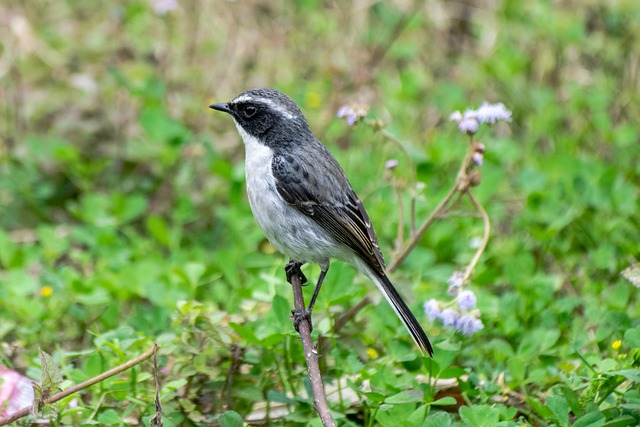
Bushchat – The Bold Little Songbird of Meadows and Open Countryside
The Bushchat is a charming small songbird known for its upright posture, alert personality, and melodious calls. Often seen perched on shrubs, fence posts, or tall grasses, this energetic bird patiently watches for insects before making swift flights to catch its prey. Bushchats inhabit grasslands, farmlands, scrublands, and open woodlands across Europe, Asia, and Africa, depending on the species. Their striking plumage, lively behavior, and beautiful songs make them a favorite among birdwatchers and nature enthusiasts. Despite their modest size, Bushchats are fearless defenders of their territory and play an important role in maintaining healthy ecosystems by controlling insect populations.
Fun Facts
- Bushchats often perch on elevated spots to scan for insects before swooping down to capture them.
- Male Bushchats usually display brighter and more colorful plumage than females.
- Many Bushchat species are migratory, traveling thousands of kilometers between breeding and wintering grounds.
- They frequently flick their tails and wings while perched, a characteristic behavior of many chat species.
- Bushchats are highly territorial during the breeding season and vigorously defend their nesting areas.
- Their nests are usually hidden low in grass, shrubs, or under dense vegetation.
- Bushchats primarily feed on insects but will also eat berries and seeds during colder months.
- Their cheerful songs and sharp alarm calls can often be heard before the birds are seen.
Scientific Information
| Category | Information |
| Common Name | Bushchat |
| Representative Scientific Name | Saxicola torquatus (African Stonechat Complex) / Saxicola maurus (Siberian Stonechat) / Saxicola rubicola (European Stonechat) |
| Family | Muscicapidae |
| Order | Passeriformes |
| Class | Aves |
| Diet | Insects, spiders, larvae, berries, seeds |
| Length | 11–14 cm (4.3–5.5 inches) |
| Weight | 12–18 grams |
| Wingspan | 18–24 cm |
| Lifespan | Around 4–8 years in the wild |
| Habitat | Grasslands, scrublands, meadows, agricultural fields, open woodlands, marsh edges |
| Distribution | Europe, Asia, Africa, depending on the species |
Habits & Behavior
Bushchats are active, agile birds that spend much of their time perched on exposed branches, grasses, rocks, or fence posts while searching for prey. They use a hunting technique known as “perch-and-pounce,” where they patiently watch for insects before flying down to catch them with remarkable precision.
These birds primarily feed on insects such as beetles, flies, grasshoppers, caterpillars, ants, and spiders. During autumn and winter, when insects become less abundant, they supplement their diet with berries and seeds.
Bushchats are strongly territorial during the breeding season. Males sing from prominent perches to attract mates and warn rival males to stay away. Their songs consist of pleasant whistles, chirps, and chat-like calls, giving the group its common name.
Their nests are carefully concealed in dense grass, shrubs, or low vegetation, helping protect eggs and chicks from predators. Both parents participate in feeding and caring for their young until they are ready to leave the nest.
Many Bushchat species undertake seasonal migrations, breeding in northern regions during spring and summer before moving to warmer southern areas for the winter. Others remain resident throughout the year, depending on climate and food availability.
With their striking appearance, energetic hunting style, beautiful songs, and adaptability to open landscapes, Bushchats remain one of the most delightful and easily recognizable small songbirds found across three continents.