Prinia – The Tiny Tail-Wagging Songbird of Grasslands and Gardens
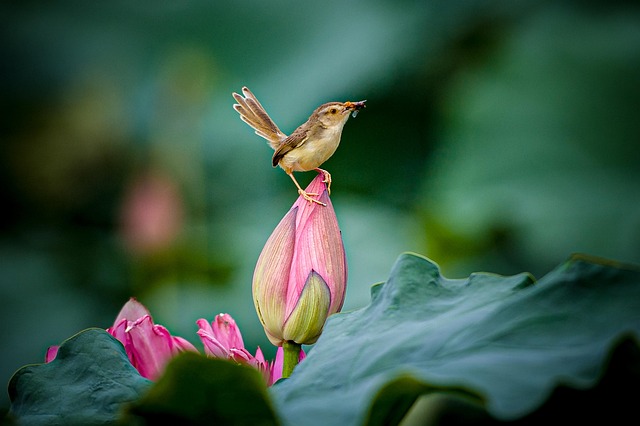
Prinias are small, lively songbirds best known for their energetic movements, long tails, and cheerful, repetitive songs. These agile birds thrive in grasslands, scrublands, wetlands, farmlands, and gardens, where they spend much of their time hopping through dense vegetation in search of insects. Although their plumage is generally subtle, their lively personalities and constant tail-flicking make them easy to recognize. Widely distributed across Asia, Africa, and parts of Europe, Prinias are highly adaptable birds that play an important role in controlling insect populations and maintaining healthy ecosystems.
Fun Facts
- Prinias constantly flick and wag their long tails while foraging.
- They are much easier to hear than to see because they spend most of their time hidden in dense vegetation.
- Male Prinias sing loudly from exposed perches during the breeding season to defend their territories.
- Despite their tiny size, they are bold and highly territorial.
- Their nests are often sewn or woven together using leaves, grass, and spider silk.
- Prinias are incredibly agile and can move quickly through thick grasses and shrubs.
- They primarily feed on insects, making them valuable natural pest controllers.
- Some Prinia species change their tail length and plumage slightly between breeding and non-breeding seasons.
Scientific Information
| Category | Information |
| Common Name | Prinia |
| Genus | Prinia |
| Family | Cisticolidae |
| Order | Passeriformes |
| Class | Aves |
| Diet | Insects, spiders, caterpillars, larvae, and occasionally small seeds |
| Length | 10–15 cm (4–6 inches) |
| Weight | 6–15 grams |
| Wingspan | Approximately 12–18 cm |
| Lifespan | Around 4–7 years in the wild |
| Habitat | Grasslands, scrublands, wetlands, reed beds, agricultural fields, gardens, and open woodlands |
| Distribution | Asia, Africa, and southern Europe |
Habits & Behavior
Prinias are highly active birds that spend much of the day moving rapidly through grasses, reeds, bushes, and low shrubs while searching for food. Their constant tail-flicking and quick hopping movements are among their most distinctive behaviors.
They feed mainly on insects, spiders, caterpillars, and other small invertebrates, carefully picking prey from leaves, stems, and the ground. Occasionally, they consume small seeds, particularly when insects are less abundant.
Prinias are strongly territorial during the breeding season. Males frequently sing from elevated perches, producing loud and repetitive songs to attract females and warn rival males away. Their vocalizations are often one of the easiest ways to locate them, even when they remain hidden in dense vegetation.
Their nests are beautifully woven from grasses, leaves, and fine plant fibers, often reinforced with spider silk. Depending on the species, nests are built close to the ground within shrubs, tall grasses, or reeds. Both parents usually share the responsibilities of incubating eggs and feeding the chicks.
Prinias are generally seen alone or in pairs, although they may occasionally join mixed-species feeding flocks outside the breeding season. Their excellent camouflage, agility, and preference for dense vegetation help protect them from predators.
Adaptable and resilient, Prinias thrive in both natural habitats and human-modified landscapes such as farmland, parks, and gardens. Their lively behavior, melodious songs, and important role in controlling insect populations make them one of the most delightful small songbirds found across the Old World.