Openbill Stork – The Snail Specialist of Wetlands and Rice Fields
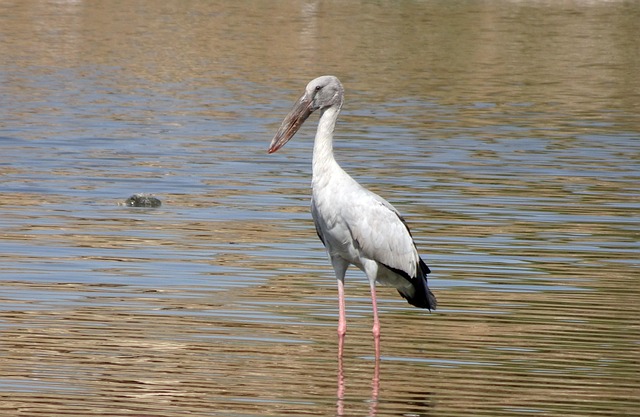
The Openbill Stork is a remarkable wading bird best known for the unique gap between its upper and lower mandibles—a specialized adaptation that makes it an expert hunter of freshwater snails. Graceful in flight and patient while foraging, this fascinating bird is commonly found in wetlands, marshes, flooded fields, rivers, and rice paddies across Asia and Africa. With its long legs, broad wings, and efficient hunting techniques, the Openbill Stork plays an essential role in maintaining the ecological balance of wetland habitats. Whether soaring effortlessly on warm air currents or carefully searching shallow waters for prey, the Openbill Stork is a captivating symbol of healthy freshwater ecosystems.
Fun Facts
- The Openbill Stork is named after the noticeable gap between its upper and lower bills, which helps it grip and extract snails from their shells.
- Freshwater snails make up the majority of its diet, making it one of the few birds specialized for this type of prey.
- Large flocks often gather in wetlands and agricultural fields during the non-breeding season.
- Openbill Storks are excellent soarers and can glide for long periods without flapping their wings.
- They usually nest in large colonies, often sharing trees with herons, egrets, ibises, and cormorants.
- Their powerful bills can easily crack open snail shells when necessary.
- They help farmers by reducing populations of snails that may damage rice crops or spread parasites.
- Although they appear quiet, they communicate by clattering their bills and using body movements during courtship.
Scientific Information
| Category | Information |
| Common Name | Openbill Stork |
| Representative Species | Anastomus oscitans (Asian Openbill) |
| Genus | Anastomus |
| Family | Ciconiidae |
| Order | Ciconiiformes |
| Class | Aves |
| Diet | Freshwater snails, mussels, frogs, fish, crabs, insects, and other aquatic animals |
| Length | 68–81 cm (27–32 inches) |
| Weight | 1–1.5 kg (2.2–3.3 lb) |
| Wingspan | 145–165 cm (57–65 inches) |
| Lifespan | Around 15–20 years in the wild |
| Habitat | Wetlands, marshes, lakes, rivers, floodplains, rice fields, ponds, and swamps |
| Distribution | South Asia, Southeast Asia, and sub-Saharan Africa (different species) |
Habits & Behavior
Openbill Storks are highly social birds that often forage and nest in large groups. They spend much of the day walking slowly through shallow water, carefully searching for freshwater snails, mussels, frogs, fish, and other aquatic prey. Their uniquely shaped bill is perfectly adapted for gripping and removing snails from their shells, making them one of nature’s most specialized feeders.
These storks are strong fliers and frequently soar high above wetlands using rising warm air currents. Their broad wings allow them to travel long distances while conserving energy, especially when moving between feeding and nesting sites.
During the breeding season, Openbill Storks form large nesting colonies in tall trees near wetlands. They build large stick nests, where both parents share responsibilities for incubating the eggs and feeding the chicks. Colonial nesting provides increased protection from predators and allows birds to benefit from shared vigilance.
Unlike many songbirds, Openbill Storks have no well-developed vocal organ for singing. Instead, they communicate through bill-clattering displays, body postures, and visual signals, particularly during courtship and nest defense.
Outside the breeding season, they may gather in impressive flocks that forage together across flooded fields and marshes. Their movements often follow seasonal rainfall patterns and changing water levels, ensuring access to abundant food resources.
As skilled wetland hunters and important natural controllers of freshwater snail populations, Openbill Storks contribute significantly to the health of aquatic ecosystems. Their graceful flight, specialized feeding behavior, and ecological importance make them one of the most fascinating wading birds found across tropical Asia and Africa.