Shelduck Bird: Colorful Waterfowl with Unique Habits & Fascinating Facts
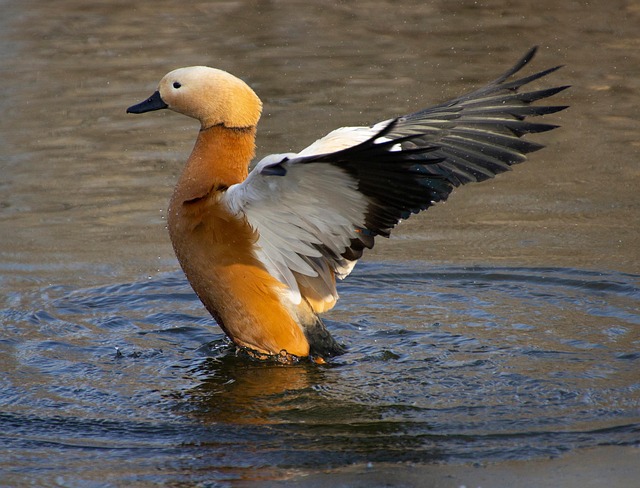
The Shelduck is a striking and elegant waterbird known for its colorful plumage, graceful swimming, and strong, goose-like appearance. Belonging to the duck family Anatidae, shelducks are found across Europe, Asia, Africa, and Australia, where they inhabit coastal estuaries, wetlands, salt marshes, rivers, lakes, and lagoons.
There are several species of shelducks, with the Common Shelduck (Tadorna tadorna) being one of the best known. These birds are larger than most ducks and display a beautiful combination of white, black, chestnut, and green feathers. Their bold patterns and distinctive red bills make them easy to identify in the wild.
Shelducks are social birds that often gather in pairs or flocks. Their loud calls, strong flying ability, and preference for open wetlands make them a favorite among birdwatchers and wildlife photographers around the world.
Fun Facts
- Shelducks are considered a link between ducks and geese because they share characteristics of both groups.
- Several species of shelducks are found across Europe, Asia, Africa, and Australia.
- The Common Shelduck has glossy green-black feathers on its head that shimmer beautifully in sunlight.
- Shelducks often nest in rabbit burrows, tree cavities, rock crevices, or abandoned dens instead of building exposed nests.
- Both parents help protect and care for their ducklings after they hatch.
- They feed on small crustaceans, mollusks, aquatic insects, worms, and plant material.
- Many shelduck populations migrate seasonally between breeding and wintering grounds.
- Their strong swimming and excellent flying skills help them thrive in coastal wetlands and inland lakes.
Scientific Information
Common Name: Shelduck
Representative Species: Tadorna tadorna (Common Shelduck)
Family: Anatidae
Order: Anseriformes
Class: Aves
Diet: Omnivore (small crustaceans, mollusks, aquatic insects, worms, seeds, grasses, and aquatic plants)
Average Length: 55–65 cm (22–26 inches)
Wingspan: 100–120 cm (39–47 inches)
Weight: 0.8–1.5 kg (1.8–3.3 lbs)
Lifespan: Typically 10–15 years in the wild
Habitat: Estuaries, coastal marshes, wetlands, mudflats, lakes, rivers, lagoons, and grasslands near water
Distribution: Europe, Asia, North Africa, and parts of Australia (depending on the species)
Migration: Some populations are migratory, while others remain resident year-round.
Conservation Status: Least Concern (IUCN) for the Common Shelduck
Habits & Behavior
Shelducks are highly adaptable waterbirds that spend much of their time swimming, feeding, and resting near shallow water. They forage by dabbling, grazing on vegetation, or probing mudflats for small aquatic animals such as mollusks, crustaceans, worms, and insects.
Unlike many duck species, shelducks often choose unusual nesting sites, including rabbit burrows, abandoned fox dens, hollow trees, and rock crevices. These protected locations help keep eggs and ducklings safe from predators.
Shelducks usually form strong breeding pairs and are known for their territorial behavior during the nesting season. Both parents actively defend the nest and care for their young after hatching. Once the breeding season ends, they often gather in large flocks during migration or while molting.
These birds communicate using a variety of loud whistles, honks, and calls, especially during courtship and territorial displays. Their powerful flight, graceful swimming, and colorful appearance make shelducks one of the most attractive members of the duck family.
Healthy wetlands, estuaries, and coastal habitats are essential for shelducks, providing abundant food, nesting sites, and safe resting areas throughout the year.