Pipit – The Graceful Ground-Dwelling Songbird of Grasslands and Open Fields
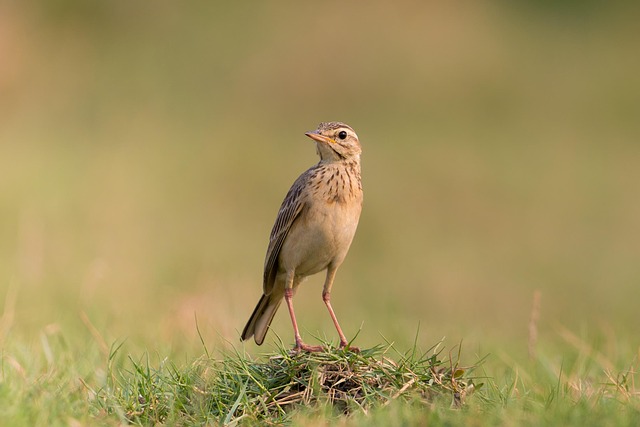
The Pipit is a small, slender songbird admired for its gentle beauty, melodious calls, and remarkable adaptability. Although its brown and streaked plumage may appear modest, the pipit is a master of camouflage, blending seamlessly into grasslands, meadows, farmlands, and open countryside. These active birds are often seen running gracefully across the ground in search of insects and seeds, constantly wagging their long tails as they forage.
Belonging primarily to the genus Anthus, pipits are found across Europe, Asia, Africa, Australia, and the Americas. Many species undertake impressive seasonal migrations, traveling thousands of kilometers between breeding and wintering grounds. Their sweet songs, graceful display flights, and important ecological role make pipits a favorite among birdwatchers and nature enthusiasts around the world.
Fun Facts
- Pipits are famous for their habit of constantly wagging or bobbing their tails while walking.
- There are more than 40 species of pipits worldwide.
- Many pipit species perform beautiful aerial song displays during the breeding season.
- Their streaked brown plumage provides excellent camouflage against grass and soil.
- Pipits are fast runners and prefer walking or running rather than hopping.
- Several species migrate thousands of kilometers each year between breeding and wintering habitats.
- They feed on insects during summer but eat more seeds in winter when insects are scarce.
- Pipits help farmers by consuming insects that can damage crops.
Scientific Information
| Category | Information |
| Common Name | Pipit |
| Family | Motacillidae |
| Order | Passeriformes |
| Class | Aves |
| Primary Genus | Anthus |
| Number of Species | Over 40 species |
| Well-known Species | Meadow Pipit (Anthus pratensis), Tree Pipit (Anthus trivialis), Richard’s Pipit (Anthus richardi), Red-throated Pipit (Anthus cervinus), Olive-backed Pipit (Anthus hodgsoni) |
| Size | 14–18 cm (5.5–7 in) |
| Weight | 18–40 g |
| Diet | Insects, spiders, larvae, grass seeds, small grains |
| Lifespan | Approximately 4–8 years |
| Habitat | Grasslands, meadows, agricultural fields, tundra, open woodlands, wetlands |
| Distribution | Worldwide, except Antarctica |
| Conservation Status | Most species are Least Concern (IUCN) |
Habits & Behavior
Pipits are energetic and highly active birds that spend much of their lives on the ground. They move quickly through grasslands and open fields, running with light, graceful steps while searching for insects, spiders, larvae, and seeds. Their characteristic tail-wagging behavior is one of the easiest ways to identify them in the wild.
Unlike many small birds that hop, pipits usually walk or run, making them well adapted to life in open habitats. Their streaked plumage provides exceptional camouflage, allowing them to avoid predators by blending into dry grasses and bare soil.
During the breeding season, male pipits perform spectacular aerial display flights. They soar high into the sky while singing continuously before descending gracefully with outstretched wings. These displays help establish territory and attract mates.
Pipits build well-hidden cup-shaped nests on the ground, carefully concealed among dense grasses or low vegetation. The female typically incubates the eggs, while both parents work together to feed and protect the chicks after they hatch.
Many pipit species are long-distance migrants, traveling between northern breeding grounds and warmer wintering areas. During migration, they often gather in loose flocks and can be seen feeding together in fields, wetlands, and coastal meadows.
Although their appearance is subtle compared to brightly colored birds, pipits are admired for their elegant movements, sweet songs, and remarkable endurance. Their presence in healthy grasslands and wetlands also makes them valuable indicators of thriving natural ecosystems.