Nightjar: The Silent Master of the Night Sky
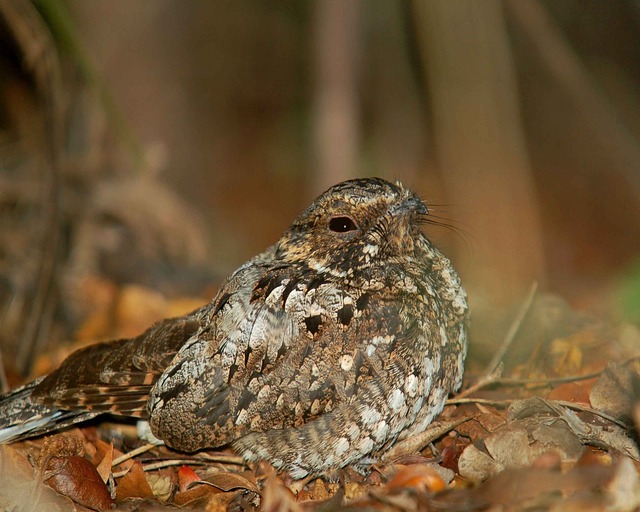
The Nightjar is one of nature’s most mysterious and fascinating birds. Known for its incredible camouflage, silent flight, and haunting nighttime calls, the nightjar is perfectly adapted to life after sunset. Unlike most birds, it spends the day hidden among leaves or on the forest floor, becoming active only at dusk and during the night. With its wide mouth designed for catching flying insects and its remarkable ability to blend into its surroundings, the nightjar remains one of the most elusive birds in the world.
Whether you hear its distinctive calls echoing through the evening or catch a rare glimpse of one gliding silently overhead, the nightjar is a true marvel of the natural world.
Fun Facts
- Nightjars are nocturnal birds that hunt mainly after sunset.
- They catch insects such as moths, beetles, and flying ants while flying.
- Their mottled feathers provide exceptional camouflage, making them nearly invisible on the ground.
- Despite appearing to have a huge beak, most of the opening is actually a very wide mouth used for catching insects.
- Tiny bristles around the mouth help guide insects into their mouths during flight.
- Instead of building a nest, female nightjars usually lay their eggs directly on bare ground or leaf litter.
- Their soft feathers allow them to fly almost silently, similar to owls.
- There are nearly 100 species of nightjars found across Europe, Asia, Africa, Australia, and the Americas.
- Many cultures associate their mysterious nighttime calls with myths and legends.
- Some species become active during moonlit nights when insects are more abundant.
Scientific Information
| Feature | Information |
| Common Name | Nightjar |
| Order | Caprimulgiformes |
| Family | Caprimulgidae |
| Number of Species | About 95–100 species |
| Size | 18–40 cm (7–16 inches) |
| Weight | 35–150 g |
| Diet | Flying insects (moths, beetles, flies, mosquitoes, flying ants) |
| Habitat | Forests, woodlands, grasslands, heathlands, deserts, and open countryside |
| Activity | Mostly nocturnal and crepuscular |
| Lifespan | Typically 4–10 years in the wild (varies by species) |
| Conservation Status | Most species are Least Concern, though some face habitat loss and population declines |
Habits & Behavior
Nightjars spend most of the daylight hours resting quietly on the ground, tree branches, or fallen logs where their camouflage makes them nearly impossible to detect. As twilight approaches, they become active and begin searching for flying insects.
They are agile aerial hunters, using quick turns and wide mouths to catch insects in mid-air. Unlike birds that rely on strong beaks to grab prey, nightjars simply scoop insects into their mouths while flying.
During the breeding season, males perform impressive display flights while producing distinctive calls to attract females and defend their territories. Their vocalizations vary by species, ranging from soft churrs and whistles to repetitive mechanical-sounding trills.
Nightjars do not construct traditional nests. Instead, females lay one or two well-camouflaged eggs directly on bare ground or among leaves. Both parents help protect the eggs and chicks by remaining perfectly still or performing distraction displays to lure predators away.
These birds play an important ecological role by controlling populations of nocturnal insects, making them valuable members of many ecosystems.