Watercock — The Secretive King of Asian Marshes
The Watercock (Gallicrex cinerea) is a fascinating wetland bird belonging to the rail family, Rallidae. Found mainly across South and Southeast Asia, this elusive bird prefers marshes, rice fields, wet grasslands, and other areas with dense vegetation.
Although the Watercock can be difficult to spot, its unusual appearance and behavior make it a remarkable bird to discover. The male is particularly distinctive during the breeding season, developing a dark body, reddish facial features, and a prominent horn-like projection above the bill. Females are smaller and generally brownish, helping them blend into their surroundings.
Watercocks spend much of their time walking through vegetation rather than flying. They use their long toes to move across soft, muddy ground and search for food among grasses and aquatic plants.
Fun Facts
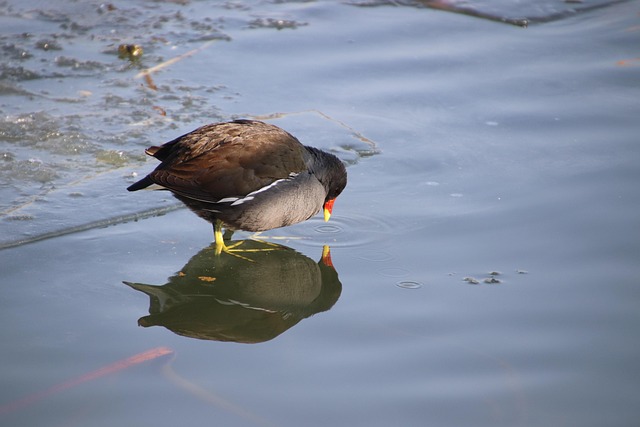
- A member of the rail family: The Watercock belongs to the same family as moorhens, coots, and swamphens.
- A master of wetlands: It commonly lives in marshes, rice paddies, swamps, and wet grasslands.
- Males change dramatically: During breeding season, adult males develop striking dark plumage and a large frontal projection.
- Ground nesting: Watercocks build nests among dense vegetation close to the water.
- Mostly secretive: They often stay hidden in tall vegetation and can be easier to hear than see.
- An opportunistic feeder: Their diet includes seeds, shoots, insects, small aquatic animals, and other available food.
- Excellent runners: Like many rails, Watercocks can move quickly through dense vegetation.
- Asian wetland specialist: Its range extends across many parts of South and Southeast Asia.
Scientific Information
Common Name: Watercock
Scientific Name: Gallicrex cinerea
Family: Rallidae
Order: Gruiformes
Class: Aves
Kingdom: Animalia
Type: Wetland bird / Rail
Distribution: South and Southeast Asia
Habitat: Marshes, swamps, rice fields, wetlands, and wet grasslands
Diet: Seeds, aquatic vegetation, insects, and small aquatic animals
Nesting: Ground nest hidden in dense vegetation
The Watercock is sexually dimorphic, meaning males and females have noticeably different appearances. Adult males become especially distinctive during the breeding season, while females have more subdued brown coloration.
Habits & Behavior
Watercocks are secretive and primarily ground-dwelling birds. They spend much of their time walking through reeds, grasses, marsh vegetation, and rice fields in search of food.
They use their long toes to navigate muddy and soft ground. Their diet is varied, allowing them to take advantage of both plant and animal food sources. They may feed on seeds and young vegetation while also searching for insects and other small creatures.
During the breeding season, males become more conspicuous and territorial. They may produce loud calls to communicate with other Watercocks and establish their presence.
Despite living in wet environments, Watercocks are not constantly swimming. Instead, they are particularly adapted to walking through dense vegetation and shallow wetlands.
When threatened, a Watercock will often rely on its camouflage and dense vegetation for protection. It can also run rapidly through reeds and grasses and may take flight when necessary.
Why the Watercock Matters
The Watercock is an important part of Asian wetland ecosystems. By feeding on vegetation, insects, and other small organisms, it participates in the food web and contributes to the natural balance of wetland habitats.
However, wetlands are increasingly affected by habitat loss, agricultural changes, pollution, and other environmental pressures. Protecting marshes, rice-field habitats, and other wetlands is essential for the Watercock and countless other species that depend on these ecosystems.
The Watercock may be difficult to see, but once you learn about this mysterious wetland bird, you’ll understand why it is one of Asia’s most fascinating rails.