Moorhen: The Graceful Water Bird of Ponds and Wetlands
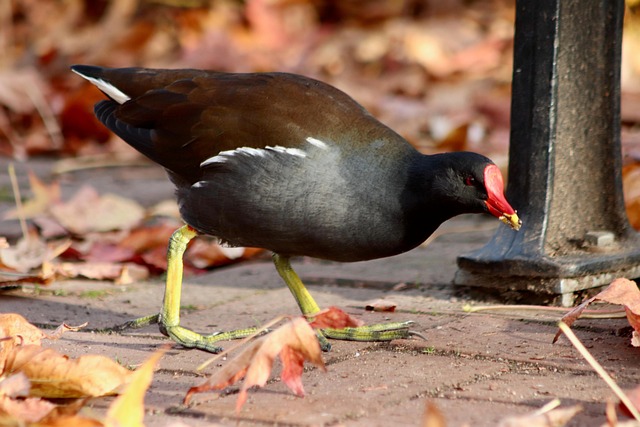
The Moorhen is a charming and adaptable water bird commonly found around ponds, lakes, marshes, canals, and other freshwater wetlands. With its dark body, long greenish legs, and distinctive red forehead shield and bill, the Moorhen is easy to recognize as it walks gracefully along the water’s edge or swims among aquatic plants.
Moorhens belong to the rail family, Rallidae, which includes other wetland birds such as coots, crakes, and rails. Although they often appear shy, Moorhens can be surprisingly bold and are highly skilled at moving through dense vegetation. They can swim well, walk on floating plants, and even climb through reeds and branches.
These fascinating birds play an important role in wetland ecosystems. Their varied diet and adaptable nature allow them to live successfully in many different habitats around the world.
Fun Facts
- Moorhens belong to the rail family, which includes coots, rails, and crakes.
- Their bright red frontal shield and bill make them easy to identify.
- They have long toes that help them walk on soft mud and floating vegetation.
- Moorhens are excellent swimmers but do not have fully webbed feet.
- They can walk, swim, climb, and fly, making them highly adaptable wetland birds.
- Moorhens usually build nests close to water, hidden among reeds and dense plants.
- Young Moorhens may stay with their parents for some time and can sometimes help care for younger chicks.
- They are omnivorous and eat both plant material and small animals.
- Different species of Moorhens are found across many parts of the world.
- Young chicks are often covered with dark, fluffy down after hatching.
Scientific Information
Common Name: Moorhen
Family: Rallidae
Order: Gruiformes
Class: Aves
Phylum: Chordata
Kingdom: Animalia
Moorhens are medium-sized wetland birds characterized by their compact bodies, long legs, and extremely long toes. Their appearance varies slightly depending on the species and region. A typical Moorhen has dark gray or blackish plumage, often with lighter markings along the sides, while its bill and frontal shield are usually red with a yellow tip.
They are omnivorous birds. Their diet may include seeds, leaves, grasses, aquatic plants, fruits, insects, worms, snails, and other small invertebrates. This flexible diet helps Moorhens survive in a wide variety of wetland environments.
Moorhens are generally associated with freshwater habitats containing plenty of vegetation. However, they are highly adaptable and may also be seen in urban ponds, drainage canals, reservoirs, parks, and agricultural wetlands.
Habits & Behavior
Moorhens are active and resourceful birds that spend much of their time searching for food along the edges of water or among floating vegetation. They often walk slowly and carefully, using their long toes to balance on muddy ground and aquatic plants.
When swimming, a Moorhen moves smoothly through the water while gently bobbing its head. Although it prefers to stay close to cover, it can fly when necessary. Its flight often begins with a quick run across the water or ground before taking off.
Moorhens are usually cautious and may quickly disappear into reeds when they sense danger. However, birds living in parks and urban wetlands can become accustomed to human activity and may be easier to observe.
During the breeding season, Moorhens become territorial and actively protect their nesting areas. Their nests are usually made from grasses, reeds, and other plant materials, carefully concealed within dense vegetation near water. Both parents may participate in caring for the eggs and young.
Social behavior can vary depending on the season and available habitat. Outside the breeding period, Moorhens may be seen alone, in pairs, or in small groups. Their ability to adapt to changing environments, combined with their excellent skills in swimming, walking, climbing, and flying, makes the Moorhen one of the most fascinating birds of freshwater wetlands.
The Moorhen is a wonderful symbol of wetland life—graceful on the water, agile on land, and perfectly adapted to life among reeds and aquatic plants. Observing one quietly moving through a pond or marsh is a reminder of the beauty and diversity found in the world’s wetlands.