Phoebe — The Charming Flycatcher with a Distinctive Call
The Phoebe is a small, active songbird belonging to the flycatcher family, Tyrannidae. Phoebes are known for their upright posture, frequent tail movements, and characteristic calls that make them easy to recognize in the field. They are often seen sitting quietly on branches, fences, wires, or other exposed perches before suddenly flying out to catch insects.
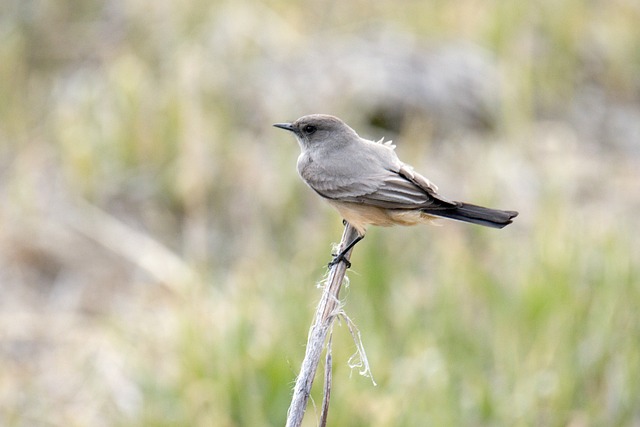
The name Phoebe refers to several closely related species, including the Eastern Phoebe, Black Phoebe, and Say’s Phoebe. Although they differ in appearance and habitat, they share the typical flycatcher behavior of hunting insects from convenient perches.
Phoebes can be found across a wide range of habitats, including woodland edges, gardens, farms, wetlands, streams, and even urban areas. Their combination of attractive appearance, interesting behavior, and distinctive vocalizations makes them a favorite among birdwatchers.
Fun Facts
- Excellent insect hunters: Phoebes catch many insects in mid-air, including flies, beetles, moths, and other small flying insects.
- Distinctive calls: The Eastern Phoebe is famous for its clear, repeated “fee-bee” call, which is also the origin of its common name.
- Constant tail movement: Phoebes often bob or wag their tails while perched, making this a useful identification feature.
- Comfortable around people: Some Phoebe species readily build nests around buildings, bridges, barns, and other human-made structures.
- North American birds: Several well-known Phoebe species occur throughout different parts of North America.
- Natural pest control: By eating large numbers of insects, Phoebes can provide a helpful natural form of insect control.
- Adaptable birds: Phoebes can live in a variety of environments, from forests and wetlands to suburban neighborhoods.
Scientific Information
Common Name: Phoebe
Family: Tyrannidae
Order: Passeriformes
Class: Aves
Kingdom: Animalia
Type: Songbird / Flycatcher
“Phoebe” is a common name used for several species in the genus Sayornis. Some of the best-known species include:
- Eastern Phoebe (Sayornis phoebe)
- Black Phoebe (Sayornis nigricans)
- Say’s Phoebe (Sayornis saya)
Phoebes belong to the New World flycatcher family (Tyrannidae), one of the largest bird families in the Americas. They have relatively short, broad bills that are well suited to catching insects.
Their diet consists primarily of insects and other small invertebrates, although they may also consume berries and other fruits, particularly when insects are less available.
Habits & Behavior
Insect Hunting
Phoebes are skilled sit-and-wait predators. They usually perch on a branch, fence, rock, or wire and watch for passing insects. When they spot prey, they quickly fly out, capture it, and often return to the same or a nearby perch.
Tail Wagging
One of the most recognizable behaviors of a Phoebe is its frequent tail bobbing or wagging. The bird may repeatedly move its tail while perched, especially when it is alert or preparing to hunt.
Vocal Behavior
Phoebes use calls to communicate with mates and other birds and to defend their territory. Their simple but distinctive vocalizations can be particularly noticeable during the breeding season.
Nesting
Phoebes generally build cup-shaped nests from materials such as mud, grass, moss, and plant fibers. Depending on the species, nests may be placed on ledges, under bridges, beneath building overhangs, or on natural surfaces.
Habitat
They commonly inhabit woodlands, forest edges, open areas, wetlands, farms, parks, gardens, and urban environments. Black Phoebes are especially associated with areas near water.
Migration
Migration varies by species. Eastern Phoebes are generally migratory, with many northern populations moving south during winter, while some populations in warmer regions remain year-round. Black Phoebes are largely resident birds.
Social Behavior
Phoebes are usually seen alone or in pairs rather than in large flocks. During breeding season, adults become territorial and actively defend nesting and feeding areas.
Listen to the Phoebe Sound
The distinctive voice of the Phoebe is one of the easiest ways to experience this fascinating bird. Listen carefully to its repeated calls and enjoy the natural sounds of this remarkable flycatcher.