Blue Tit — A Tiny Bird with Brilliant Blue Beauty
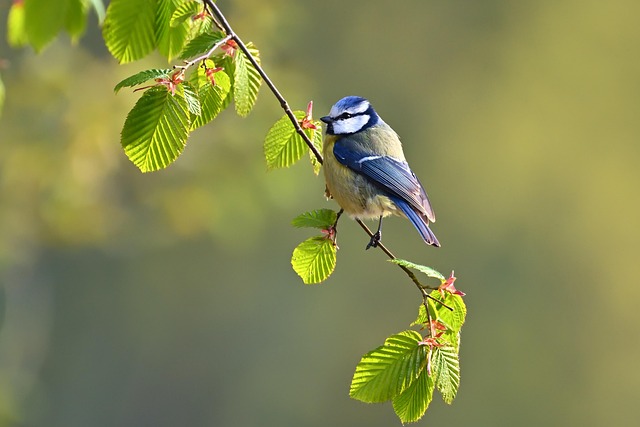
The Blue Tit is a small, colorful songbird famous for its bright blue crown, blue wings, yellow breast, and charming white face. Found across much of Europe and parts of western Asia, this energetic little bird is a favorite in gardens, parks, woodlands, and suburban areas.
Despite its tiny size, the Blue Tit is remarkably active and agile. It often moves quickly through branches, hanging upside down to search leaves and twigs for insects and other food. Its cheerful calls and striking appearance make it one of the most recognizable small birds in its range.
The Blue Tit belongs to the tit family (Paridae) and is particularly well adapted to woodland environments. During the breeding season, pairs usually nest in natural tree cavities or nest boxes, where the female can raise a surprisingly large brood of chicks.
Fun Facts
- A colorful little bird: Its combination of blue, yellow, white, and black makes it especially easy to recognize.
- A cavity nester: Blue Tits usually build their nests inside holes in trees, walls, or nest boxes.
- Large families: A female may lay around 7–13 eggs, although clutch size can vary.
- Insect hunter: Caterpillars, insects, and their larvae are particularly important during the breeding season.
- Excellent acrobat: Blue Tits can cling to branches and hang upside down while searching for food.
- Very adaptable: They readily use artificial nest boxes and can live close to people.
- Active throughout winter: Unlike many migratory birds, most Blue Tits remain in their breeding areas year-round.
- A vocal bird: Blue Tits have a variety of calls used for communication, alarm, and maintaining contact with other birds.
- Important for ecosystems: By feeding on insects and other small invertebrates, they play a useful role in controlling insect populations.
Scientific Information
Common Name: Blue Tit
Scientific Name: Cyanistes caeruleus
Family: Paridae
Order: Passeriformes
Class: Aves
Type: Small songbird
Average Length: About 11–12 cm
Wingspan: About 17–20 cm
Weight: Approximately 9–12 g
Lifespan: Typically a few years in the wild, although some individuals live considerably longer
Diet: Insects, caterpillars, spiders, seeds, fruits, and other plant material
Habitat: Deciduous woodland, gardens, parks, hedgerows, and urban areas
Distribution: Mainly Europe and parts of western Asia
The Blue Tit is a member of the Paridae family and is closely related to other tits. Its scientific name, Cyanistes caeruleus, reflects its characteristic blue coloration.
Its small body and relatively short wings make it highly maneuverable among branches and foliage. During spring and summer, insects and caterpillars provide important protein for adults and growing chicks. In autumn and winter, its diet becomes more varied and may include seeds, berries, and other plant-based foods.
Habits & Behavior
Feeding Behavior
Blue Tits are active foragers. They carefully inspect leaves, branches, buds, and tree bark for insects and spiders. Their ability to move along branches and hang upside down gives them access to food that larger birds may overlook.
Social Behavior
Outside the breeding season, Blue Tits may join mixed-species feeding flocks with other small woodland birds. These groups can help birds locate food while providing additional opportunities to detect predators.
Breeding
The breeding season generally begins in spring. Blue Tits prefer enclosed nesting sites such as tree cavities and nest boxes. The female builds the nest using materials such as moss, grass, feathers, and other soft vegetation.
After laying her eggs, she incubates them while the male often helps provide food. Both parents participate in feeding the hungry chicks after they hatch.
Communication
Blue Tits are highly vocal and use different calls for contact, alarm, and social communication. Their lively songs and calls can often be heard before the bird is even spotted.
Movement & Adaptation
Most Blue Tits are relatively sedentary, although some individuals may move short distances depending on food availability and weather. Their ability to exploit gardens, feeders, and nest boxes has helped them thrive in many human-dominated landscapes.
Relationship with Humans
Blue Tits are popular garden birds and readily visit bird feeders. Providing suitable nest boxes and maintaining native vegetation can create valuable habitat for them. However, natural food sources and safe nesting locations remain important for maintaining healthy populations.
The Blue Tit may be tiny, but its bright colors, energetic personality, clever foraging skills, and cheerful calls make it one of nature’s most delightful little songbirds.