Treecreeper – The Tiny Bird That Masters Tree Trunks
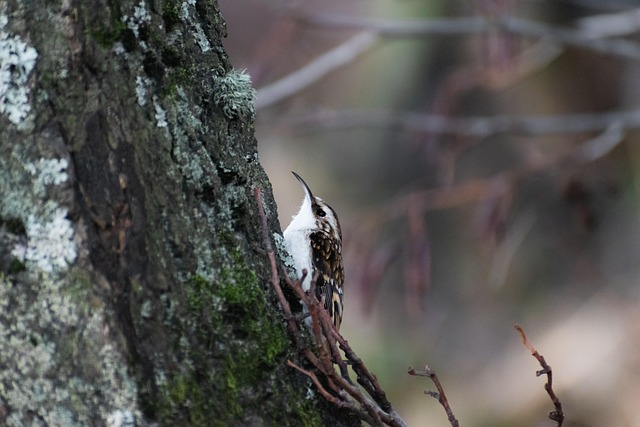
The Treecreeper is a small, agile woodland bird famous for its remarkable ability to climb tree trunks in search of food. With its slender, curved bill, cryptic brown plumage, and stiff tail feathers, it blends beautifully into the bark of trees. Moving upward in a distinctive spiral pattern, the Treecreeper carefully probes cracks and crevices for tiny insects and other invertebrates. Its quiet, secretive nature makes it easy to overlook, but its unique climbing technique makes it one of the most fascinating birds of the forest.
Fun Facts
- A natural tree climber: Treecreepers spend much of their time climbing tree trunks and branches in search of food.
- Spiral climber: It typically works its way upward around a tree trunk, inspecting different sections of bark as it goes.
- Built for climbing: Its long, curved claws and stiff tail feathers help it grip and support itself against tree bark.
- Excellent camouflage: Its brown-and-white plumage closely resembles tree bark, helping it remain hidden from predators.
- Tiny food hunter: Its slender, curved bill is perfectly suited for extracting insects and larvae from narrow cracks in bark.
- Often overlooked: Because it moves quietly and blends so well with trees, people may hear or see a Treecreeper only after looking carefully.
- A woodland specialist: It is strongly associated with mature trees and wooded habitats.
Scientific Information
The name Treecreeper refers to a group of small passerine birds in the family Certhiidae. One of the best-known species is the Eurasian Treecreeper (Certhia familiaris), which occurs across large parts of Europe and Asia.
Treecreepers have slender bodies, long tails, sharply curved claws, and narrow, downward-curving bills. Their cryptic plumage generally combines shades of brown, buff, white, and gray, providing excellent camouflage against tree bark.
They are primarily insectivorous, feeding on insects, larvae, spiders, and other small invertebrates found beneath loose bark and within tree crevices. During colder periods, some species may also consume seeds and other plant material.
Habits & Behavior
Treecreepers are active, secretive, and highly adapted woodland birds. They usually begin near the lower part of a tree trunk and climb upward in a spiral, using their strong feet and stiff tail feathers for support. Once they reach higher sections of the trunk, they often fly to the base of another tree and begin the process again.
Their feeding behavior is particularly distinctive. Rather than simply searching on the surface, they use their fine, curved bills to probe cracks in the bark and uncover hidden insects and larvae.
Treecreepers are generally associated with woodlands, forests, parks, and areas containing mature trees. During the breeding season, they build nests in narrow spaces behind loose bark, in tree crevices, or other sheltered locations. Outside the breeding season, they may sometimes join mixed-species flocks while moving through woodland.
Their combination of camouflage, climbing ability, and specialized feeding behavior makes the Treecreeper a remarkable example of how birds can become perfectly adapted to a particular environment.