Mallard – The Familiar Wild Duck with a Remarkable Quack
The Mallard is one of the world’s most recognizable ducks, known for its beautiful appearance, distinctive quacking call, and remarkable ability to thrive in a wide variety of wetland habitats. Often seen on ponds, lakes, rivers, marshes, and even urban waterways, the Mallard has become a familiar sight across much of the Northern Hemisphere.
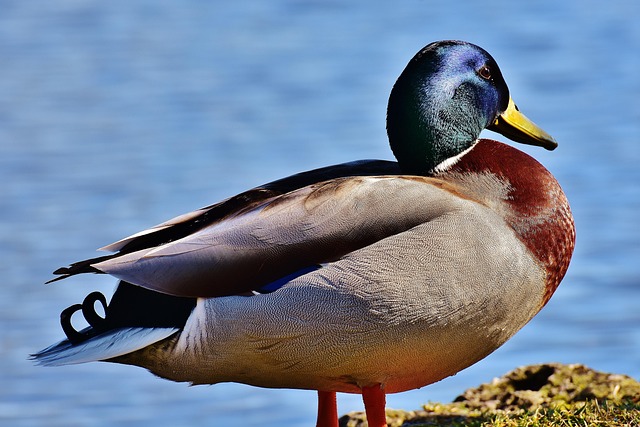
The male Mallard is particularly striking, with a glossy green head, yellow bill, white neck ring, brown chest, and gray body. Females are mostly mottled brown, providing excellent camouflage among vegetation and shoreline habitats. Despite their differences in appearance, both males and females are easily recognized by the characteristic blue or purplish wing patch, called a speculum.
Mallards are also important in the natural world because they are adaptable, widespread, and capable of living close to human settlements. Their familiar quack is one of the most recognizable duck sounds in nature.
Fun Facts
- One of the world’s best-known ducks: The Mallard is widely distributed across the Northern Hemisphere.
- The famous quack: The female Mallard is especially well known for her loud, distinctive quacking call.
- A colorful male: The male, known as a drake, develops a glossy green head during the breeding season.
- A hidden splash of color: Both sexes have a blue or purplish wing patch called a speculum, which is especially visible during flight.
- Highly adaptable: Mallards can live in natural wetlands as well as city parks, ponds, and other human-modified environments.
- Ducklings can swim quickly: Mallard ducklings are able to swim soon after hatching and are closely guided by their mother.
- They molt their feathers: After breeding, males undergo a molt that temporarily gives them a more female-like, mottled appearance. This is called eclipse plumage.
- Important ancestor: The Mallard is the wild ancestor of most domestic duck breeds.
Scientific Information
Common Name: Mallard
Scientific Name: Anas platyrhynchos
Family: Anatidae
Order: Anseriformes
Class: Aves
Type: Waterfowl
Habitat: Ponds, lakes, rivers, marshes, wetlands, estuaries, and urban waterways
Diet: Seeds, aquatic plants, grains, insects, larvae, small aquatic animals, and other food
Average Length: About 50–65 cm
Wingspan: About 81–98 cm
Lifespan: Often several years in the wild, with some individuals living considerably longer
The Mallard is a dabbling duck, meaning it generally feeds by tipping its body forward and reaching underwater rather than diving completely beneath the surface. Its broad bill contains specialized structures called lamellae, which help it filter and strain food from water and mud.
Mallards are highly successful partly because of their flexible diet and ability to use many different wetland environments.
Habits & Behavior
Mallards are generally social birds and are often found in pairs or groups, particularly outside the breeding season. They spend much of their time swimming, feeding, resting, preening, and searching for suitable vegetation and shallow water.
Feeding Behavior
Mallards commonly feed in shallow water by dabbling. They tip their bodies forward, leaving their tails pointing upward while their heads and bills reach underwater. They also feed on land, where they may consume seeds, grains, grasses, and other available foods.
Breeding Behavior
During the breeding season, male Mallards display their colorful plumage and perform various courtship behaviors to attract females. The female usually builds a nest concealed among vegetation, where she lays a clutch of eggs.
After hatching, the ducklings remain close to their mother. They quickly become capable swimmers and begin searching for food under her protection.
Communication
Mallards use a variety of vocalizations and body movements to communicate. The familiar female quack is perhaps their most recognizable sound, while males produce softer calls and other vocalizations. Ducklings also use calls to communicate with their mother and siblings.
Flight & Movement
Although they spend considerable time on water, Mallards are strong and agile fliers. They can take off directly from the water and fly with rapid wingbeats. Their colorful speculum often becomes clearly visible when their wings are extended.
Adaptability
One of the Mallard’s greatest strengths is its ability to adapt. It can survive in remote wetlands, agricultural areas, lakes, rivers, and urban parks. This flexibility has helped the species become one of the most widespread and familiar ducks in the world.
Listen to the natural sound of the Mallard and explore more fascinating bird and animal sounds on Bird Animal Sounds.