Gadwall — The Elegant and Understated Duck of Wetlands
The Gadwall is a graceful dabbling duck known for its subtle beauty, quiet nature, and distinctive black-and-white wing pattern. Often less flashy than brightly colored ducks such as the Mallard, the Gadwall has an understated elegance that becomes especially noticeable when it takes flight. It is commonly found in freshwater wetlands, ponds, lakes, marshes, and slow-moving waterways across North America, Europe, and parts of Asia.
Gadwalls are excellent swimmers and foragers, spending much of their time searching shallow water for aquatic vegetation and small invertebrates. Their calm behavior and adaptability make them a familiar sight in many wetland environments.
Fun Facts
- The Gadwall is a medium-sized dabbling duck belonging to the family Anatidae.
- It feeds heavily on aquatic plants, making vegetation an important part of its diet.
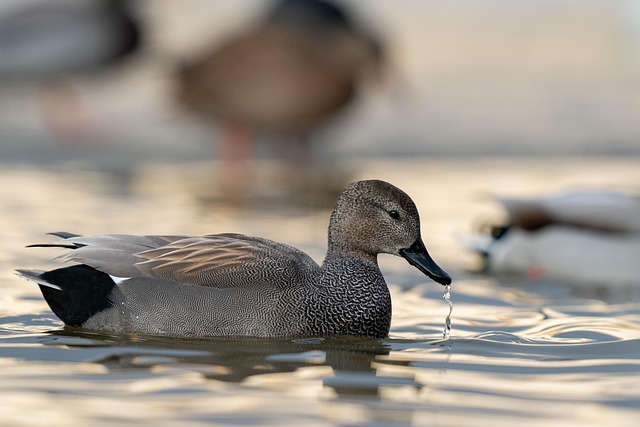
- The male has a distinctive black rear end and white wing patch, especially visible during flight.
- Gadwalls often feed by tipping forward in shallow water rather than diving deeply.
- Compared with some other ducks, Gadwalls can be relatively quiet and unobtrusive.
- Many Gadwalls migrate seasonally, traveling between breeding and wintering grounds.
- The male’s intricate gray plumage can look almost plain from a distance but reveals beautiful patterns up close.
Scientific Information
Common Name: Gadwall
Scientific Name: Mareca strepera
Family: Anatidae
Order: Anseriformes
Type: Dabbling Duck
The Gadwall is a medium-sized waterfowl species in the genus Mareca. Adult males are predominantly gray with finely patterned plumage, a black rump, and a white speculum that becomes particularly conspicuous when the wings are spread. Females are generally brown and resemble female Mallards, although their overall coloration and bill pattern help distinguish them.
Gadwalls are primarily herbivorous, feeding on aquatic vegetation, seeds, and other plant material. They may also consume aquatic invertebrates, particularly during periods when additional protein is important, such as the breeding season.
Habits & Behavior
Gadwalls are generally peaceful and adaptable birds that prefer shallow freshwater habitats with abundant vegetation. They commonly occur on lakes, ponds, marshes, reservoirs, and wetlands.
They usually forage by dabbling, tipping their bodies forward so they can reach underwater vegetation with their bills while keeping their feet near the surface. They may also graze on vegetation along the edges of wetlands.
During the breeding season, pairs become more territorial, while outside the breeding season Gadwalls may gather in larger groups. They are also strongly migratory in many parts of their range, moving to warmer areas when winter arrives.
When alarmed, Gadwalls can rise quickly from the water and fly with strong, rapid wingbeats. Their white wing patches become particularly noticeable in flight, creating a striking contrast against their otherwise subtle plumage.
The Gadwall may not have the bold colors of some other ducks, but its quiet elegance, intricate plumage, and fascinating wetland lifestyle make it a remarkable bird. From its graceful dabbling behavior to the striking wing pattern revealed in flight, the Gadwall is a beautiful example of how nature can combine simplicity with subtle detail.