Blackbird – The Beautiful Song of the Common Blackbird
The Blackbird (Turdus merula) is one of the most familiar and melodious songbirds found across Europe, parts of Asia, and other regions where it has been introduced. Its rich, flute-like song is often heard in gardens, parks, woodlands, and even urban neighborhoods.
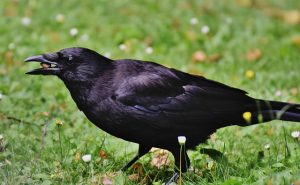
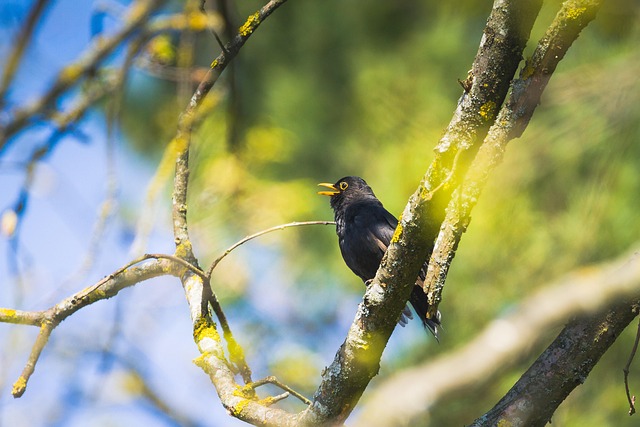
The male Blackbird is especially easy to recognize, with its glossy black plumage, bright yellow-orange bill, and distinctive yellow eye-ring. Females are generally brown with a more understated appearance. Despite its simple name, the Blackbird is a remarkable bird with a beautiful and varied vocal repertoire.
Listen to the Blackbird sound and enjoy one of nature’s most recognizable bird songs.
Fun Facts
- A familiar garden visitor: Blackbirds commonly visit gardens, parks, lawns, and other green spaces.
- A beautiful singer: The male produces a rich, melodious song consisting of clear, fluting notes.
- Different appearances: Adult males are typically black, while females are mainly dark brown.
- Bright features: Male Blackbirds have a striking yellow-orange bill and yellow eye-ring.
- Wide distribution: The species occurs across a large part of Europe and extends into parts of Asia and North Africa.
- Ground forager: Blackbirds often search for earthworms, insects, and other small creatures on the ground.
- Early singer: They frequently sing during the early morning, particularly during the breeding season.
- 🪺 Several broods: In favorable conditions, a pair may raise more than one brood during a breeding season.
Scientific Information
Common Name: Blackbird
Scientific Name: Turdus merula
Family: Turdidae
Order: Passeriformes
Type: Songbird
Diet: Insects, earthworms, berries, fruits, and other small invertebrates
Habitat: Woodlands, gardens, parks, farmland, hedgerows, and urban areas
Distribution: Europe, parts of Asia and North Africa, with introduced populations in some regions
The Blackbird belongs to the Turdidae family, which includes thrushes and related songbirds. It is a medium-sized bird with a rounded body and relatively long tail. Males and females show noticeable differences in plumage, making the species sexually dimorphic.
Although Blackbirds are often associated with natural habitats, they have adapted remarkably well to human environments. Their ability to live in gardens and urban areas has helped make them one of the most familiar songbirds in many parts of their range.
Habits & Behavior
Blackbirds are active and adaptable birds that spend considerable time foraging on the ground. They often hop across lawns and leaf litter, pausing to listen and then quickly pulling earthworms or insects from the soil.
During the breeding season, male Blackbirds become strongly territorial. A male may sing from a tree, rooftop, fence, or other elevated location to establish his territory and attract a mate. Their beautiful song is particularly noticeable during the early morning and evening.
Blackbirds build cup-shaped nests in vegetation, shrubs, climbing plants, and occasionally around buildings. The female usually takes the main role in nest construction and incubation, while both parents participate in feeding the young.
Outside the breeding season, Blackbirds can become less territorial and may gather in areas where food is plentiful. They eat a varied diet that includes insects and other invertebrates as well as berries and fruits.
Their adaptability, distinctive appearance, and wonderful song make the Blackbird a fascinating bird to observe and listen to.