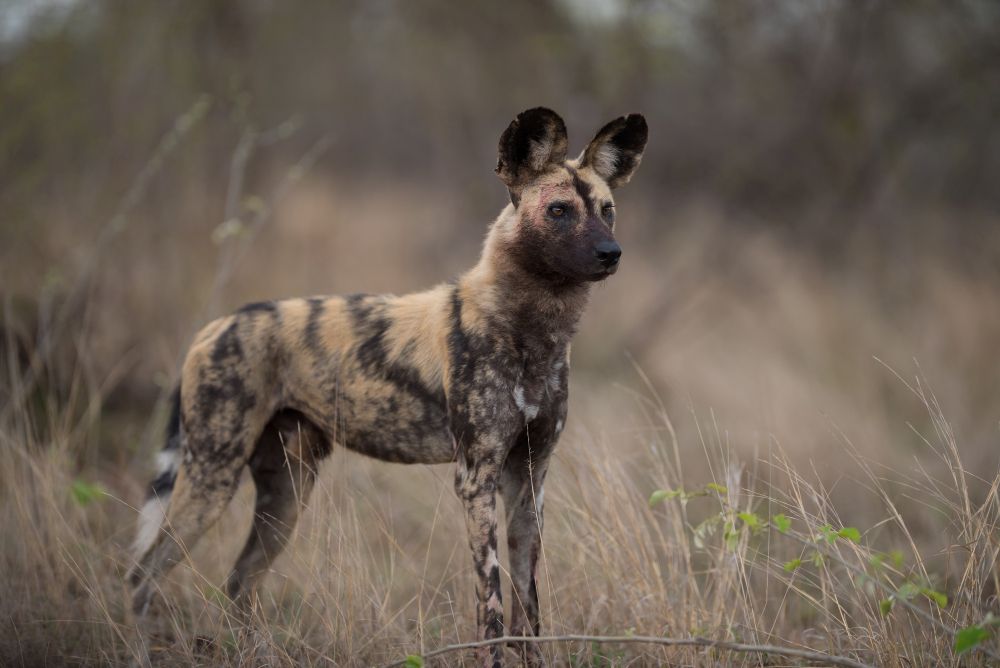
The African wild dog, also known as the painted dog, is one of Africa’s most fascinating and rare predators. Famous for its colorful fur patterns and strong teamwork, this wild canine is a symbol of cooperation and intelligence in nature. Unlike other wild animals, no two African wild dogs have the same coat pattern—each one looks completely unique. Their high-energy lifestyle, social bonds, and haunting calls make them truly special creatures of the wild.
Fun Facts About African Wild Dogs
• Every African wild dog has a unique coat pattern, like a fingerprint.
• They are among the most successful hunters in the animal kingdom, with hunting success rates over 70%.
• African wild dogs vote before hunting by sneezing—more sneezes mean stronger agreement!
• They are extremely caring; injured or sick pack members are fed first.
• These dogs can run up to 60 km/h (37 mph) while chasing prey.
• Sadly, African wild dogs are endangered, with only a few thousand left in the wild.
Scientific Information
• Common Name: African Wild Dog
• Other Names: Painted Dog, Cape Hunting Dog
• Scientific Name: Lycaon pictus
• Family: Canidae
• Habitat: Savannas, grasslands, open woodlands
• Diet: Carnivore
• Lifespan: 10–11 years (wild)
• Conservation Status: Endangered
African wild dogs belong to the Canidae family, which includes wolves, foxes, and domestic dogs. However, they are genetically unique and cannot be domesticated.
Habits & Behavior
African wild dogs are highly social animals that live in packs of 6 to 20 members. Each pack is led by a dominant breeding pair, while the rest help raise and protect the pups. They communicate using chirps, whistles, and high-pitched calls, which help them stay connected during hunts.
They hunt during early morning and evening, relying on teamwork rather than strength. Unlike many predators, they rarely fight over food and share meals peacefully. Their strong family bonds and cooperative nature make them one of the most emotionally intelligent animals in the wild.