American Robin – The Cheerful Songbird That Announces the Arrival of Spring
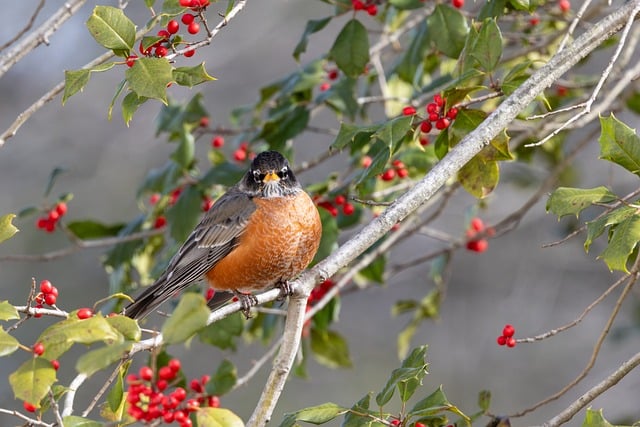
The American Robin is one of the most familiar and beloved birds in North America. Known for its warm orange breast and melodious song, this charming bird often signals the end of winter and the beginning of spring. Whether hopping across lawns in search of worms or singing from treetops at dawn, the American Robin brings life and color wherever it goes. Its adaptability to parks, forests, and suburban neighborhoods makes it a frequent and welcome visitor to backyards.
National Bird Status: The American Robin is the state bird of Connecticut, Michigan, and Wisconsin in the United States. However, it is not the national bird of any country.
Fun Facts
- American Robins are often considered a symbol of spring, as many return north when temperatures begin to rise.
- Despite their name, Robins are actually members of the thrush family, not closely related to the European Robin.
- They can spot worms by sight rather than sound, relying on their sharp vision.
- Male robins are among the first birds to sing at dawn, creating a beautiful morning chorus.
- Some robins migrate thousands of miles, while others remain in the same region year-round depending on food availability.
- Their eggs are famous for their distinctive color known as “robin’s egg blue.”
Scientific Information
- Common Name: American Robin
- Scientific Name: Turdus migratorius
- Family: Turdidae (Thrush family)
- Order: Passeriformes
- Average Length: 23–28 cm (9–11 inches)
- Wingspan: 31–41 cm (12–16 inches)
- Weight: 65–85 grams
- Lifespan: Typically 2–6 years in the wild
Habits & Behavior
The American Robin is an energetic and social bird with fascinating daily routines.
Feeding Habits:
Robins are omnivores. They mainly eat earthworms and insects during the warmer months, but switch to fruits and berries in winter when insects are scarce.
Foraging Style:
You may notice a robin running a few steps, stopping, and tilting its head—this behavior helps it locate prey on the ground.
Migration:
Northern populations migrate south for the winter, often traveling in large flocks. Interestingly, many people think robins disappear in winter, but they usually move to wooded areas where berries are plentiful.
Nesting:
Females build sturdy cup-shaped nests using grass, twigs, and mud. A typical clutch contains 3–5 bright blue eggs, and parents are highly protective of their young.
Vocalization:
Their song is a series of rich, whistling phrases often described as cheerful and soothing. Robins also use sharp alarm calls to warn others of danger.
Territorial Nature:
During breeding season, males defend their territory aggressively, singing loudly to establish boundaries.