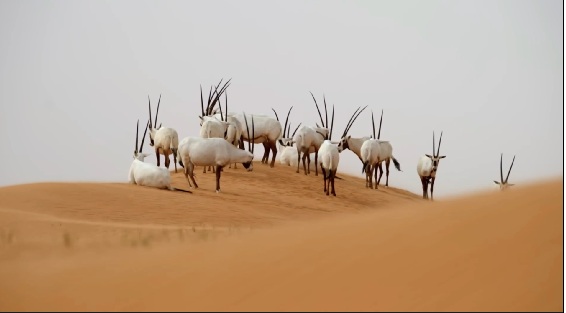
Arabian Oryx – The Elegant White Antelope of the Desert
The Arabian Oryx is one of the most iconic desert animals in the world. Known for its striking white coat, long straight horns, and remarkable ability to survive in harsh desert environments, this beautiful antelope symbolizes endurance and resilience. Once on the brink of extinction, the Arabian Oryx has become a global conservation success story thanks to dedicated wildlife protection programs. Today, it roams protected desert reserves and represents the natural heritage of the Arabian Peninsula.
The Arabian Oryx is also culturally significant in the Middle East and is recognized as the national animal of United Arab Emirates, Oman, Qatar, and Bahrain.
Fun Facts
- The Arabian Oryx can survive in extremely hot desert climates with very little water.
- Its bright white coat reflects sunlight, helping it stay cool in the scorching desert heat.
- Both males and females have long, straight horns that can grow up to about 75 cm (30 inches).
- This species once became extinct in the wild in the 1970s, but successful conservation efforts reintroduced it into natural habitats.
- The Arabian Oryx is sometimes associated with the legend of the unicorn because, from certain angles, its two horns appear as one.
Scientific Information
- Scientific Name: Oryx leucoryx
- Animal Group: Mammal
- Family: Bovidae
- Subfamily: Hippotraginae
- Average Length: 1.6 – 2 meters
- Height at Shoulder: About 1 meter
- Weight: 65 – 80 kg
- Habitat: Deserts and arid plains of the Arabian Peninsula
- Diet: Herbivore (grasses, roots, herbs, and desert plants)
Habits & Behavior
The Arabian Oryx is well adapted to life in extreme desert conditions. These animals are usually active during the early morning and evening, when temperatures are cooler. During the hottest parts of the day, they rest in shaded areas or dig shallow depressions in the sand to keep cool.
Arabian Oryx typically live in small herds led by a dominant male. They communicate with each other through body language, scent markings, and soft vocal sounds. Their strong legs allow them to travel long distances across the desert in search of food and water.
One of their most remarkable adaptations is their ability to detect rainfall from far distances, enabling them to move toward areas where fresh vegetation is growing. This survival skill helps them thrive in some of the harshest environments on Earth.