Black-Capped Chickadee – The Cheerful Little Acrobat of the North
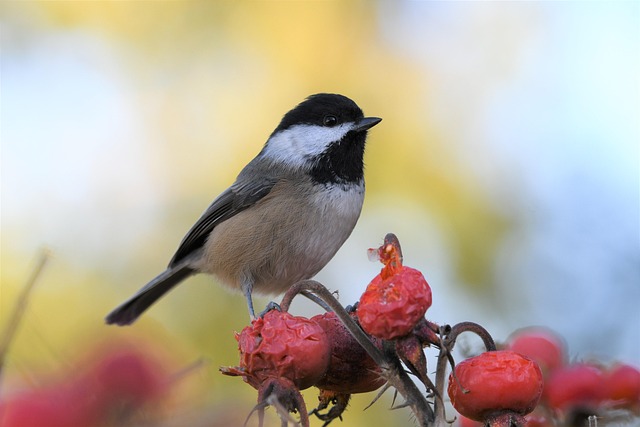
The Black-capped Chickadee is one of North America’s most charming and recognizable songbirds. With its crisp black cap, bright white cheeks, and lively personality, this tiny bird brings energy and curiosity to forests, gardens, and backyards alike. Despite its small size, the chickadee is remarkably bold, intelligent, and resilient, thriving even in harsh winter climates.
Interestingly, the Black-capped Chickadee holds special cultural significance — it is the official state bird of Massachusetts and Maine, celebrated for its friendly nature and year-round presence.
Fun Facts
- Signature Call: The bird’s name comes from its famous “chick-a-dee-dee-dee” call, which can even vary to signal danger.
- Fearless Personality: Chickadees are known for approaching humans closely, especially where food is offered.
- Winter Survivor: They can temporarily lower their body temperature at night to conserve energy during freezing weather.
- Amazing Memory: Chickadees can remember thousands of hiding places where they store seeds.
- Tiny but Tough: Despite weighing less than a coin, they endure some of the coldest winters in North America.
Scientific Info
- Scientific Name: Poecile atricapillus
- Family: Paridae
- Size: Approximately 12–15 cm (4.7–5.9 in)
- Weight: Around 9–14 grams
- Lifespan: Typically 2–3 years in the wild, though some live longer
- Range: Widely distributed across Canada, Alaska, and the northern United States
- Diet: Seeds, insects, berries, and small invertebrates
Black-capped Chickadees play an important ecological role by controlling insect populations and aiding seed dispersal.
Habits & Behavior
Black-capped Chickadees are highly active, social birds with fascinating behaviors:
- Constant Movement: They rarely sit still, hopping and fluttering energetically among branches.
- Food Caching: Chickadees store food in numerous hidden locations to survive winter scarcity.
- Mixed Flocks: Outside breeding season, they often join other small birds for safety and foraging efficiency.
- Cavity Nesters: They nest in tree holes, sometimes excavating soft wood themselves.
- Complex Communication: Their vocalizations convey different messages, including alerts about predators.
Their intelligence, adaptability, and curious nature make chickadees favorites among birdwatchers and nature lovers.
The Black-capped Chickadee proves that even the smallest creatures can possess remarkable resilience, personality, and charm — a true delight of northern landscapes.