Cassowary: The Majestic Rainforest Giant of the Tropics
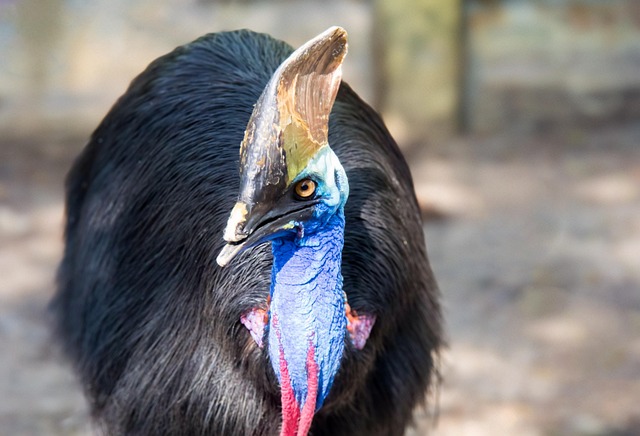
The Cassowary is one of the most extraordinary and mysterious birds on Earth. Native to the tropical rainforests of northern Australia, New Guinea, and nearby islands, this large flightless bird is renowned for its striking appearance, powerful build, and important ecological role. With its vibrant blue and red neck, glossy black feathers, and distinctive helmet-like casque atop its head, the cassowary is often called the “rainforest gardener” because it helps disperse the seeds of many plant species. Despite its impressive size and strength, the cassowary is generally shy and prefers to avoid human contact, spending much of its life hidden within dense forest vegetation.
Fun Facts
- The cassowary is the third-tallest bird in the world, after the ostrich and emu.
- It can run at speeds of up to 50 km/h (31 mph) through dense rainforest.
- Cassowaries are excellent swimmers and can cross rivers and streams with ease.
- Their casque may help them move through thick vegetation and amplify sounds.
- They possess a sharp, dagger-like claw on each foot that can grow up to 12 cm (5 inches) long.
- Cassowaries play a vital role in rainforest ecosystems by dispersing seeds over long distances.
- Like emus, male cassowaries incubate the eggs and raise the chicks alone.
- Some rainforest plants rely almost entirely on cassowaries to spread their seeds.
Scientific Information
Common Name: Cassowary
Scientific Name: Casuarius spp.
Order: Casuariiformes
Family: Casuariidae
Class: Aves
Diet: Omnivorous (primarily frugivorous)
Average Height: 1.2–1.8 meters (4–6 feet)
Average Weight: 25–85 kg (55–187 lbs)
Lifespan: 20–40 years
Habitat: Tropical rainforests, mangrove forests, and dense woodlands
Distribution: New Guinea, northeastern Australia, and nearby islands
Habits & Behavior
Cassowaries are primarily solitary birds that spend most of their lives wandering through dense rainforest in search of food. Their diet consists mainly of fallen fruits, berries, fungi, insects, small vertebrates, and other plant material. Because they consume and disperse seeds from numerous plant species, cassowaries are considered one of the most important seed dispersers in tropical forests.
These birds are generally quiet and elusive, but they can communicate using deep, low-frequency booming calls that travel long distances through the forest. Their excellent hearing allows them to detect sounds that many other animals cannot hear.
During the breeding season, females may mate with multiple males. After laying eggs, the female leaves the nest, while the male takes full responsibility for incubation and chick rearing. He carefully guards the eggs and protects the young chicks for many months after they hatch.
Although cassowaries are capable of defending themselves when threatened, they usually avoid confrontation. Their powerful legs and sharp claws make them formidable if cornered, but their preferred response is to retreat into the forest.
The cassowary’s unique appearance, ecological importance, and fascinating behavior make it one of the most remarkable birds inhabiting the tropical rainforests of the world.