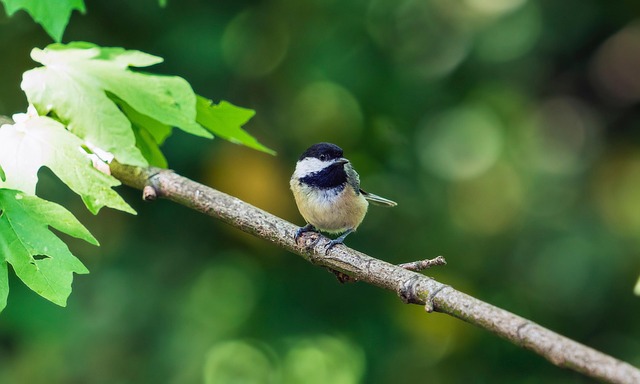
Chickadee- The Cheerful Songbird with a Curious Personality
The Chickadee is a tiny, energetic songbird admired for its cheerful “chick-a-dee-dee-dee” call and friendly nature. Despite its small size, this remarkable bird is bold, intelligent, and highly adaptable, making it a favorite among birdwatchers and backyard bird enthusiasts. Chickadees are commonly found across North America, where they inhabit forests, woodlands, parks, and suburban gardens.
Known for their curiosity, chickadees often approach humans more closely than many other wild birds. Their acrobatic movements, lively songs, and ability to survive harsh winters have earned them a special place in the hearts of nature lovers. Whether flitting through tree branches or visiting bird feeders, chickadees bring energy and charm wherever they go.
Fun Facts
- The chickadee gets its name from its famous “chick-a-dee-dee-dee” call.
- Chickadees have an impressive memory and can remember thousands of food cache locations.
- They can lower their body temperature at night to conserve energy during cold winter months.
- Chickadees store seeds and insects in tree bark crevices to eat later.
- These birds are naturally curious and may even eat from a person’s hand after gaining trust.
- They produce a wide variety of calls to communicate with flock members and warn about predators.
- Chickadees often join mixed flocks with nuthatches, woodpeckers, and kinglets during winter.
- They nest in tree cavities, and some species excavate their own nesting holes in soft, decaying wood.
Scientific Information
Common Name: Chickadee
Scientific Genus: Poecile
Family: Paridae
Order: Passeriformes
Class: Aves
Diet: Omnivore
Primary Food: Insects, caterpillars, spiders, seeds, berries, nuts, and suet.
Average Length: 11–14 cm (4.3–5.5 inches)
Wingspan: 16–21 cm (6.3–8.3 inches)
Weight: Approximately 9–14 grams
Lifespan:
- Wild: 2–5 years on average
- Some individuals have lived more than 10 years.
Habitat: Deciduous forests, mixed woodlands, conifer forests, parks, gardens, and suburban areas.
Conservation Status: Most chickadee species are classified as Least Concern, with stable populations across much of their range.
Habits & Behavior
Chickadees are active daytime birds that spend much of their time hopping through trees and shrubs in search of insects and seeds. They are exceptionally agile and often hang upside down from branches while foraging for food.
These birds are highly social and frequently travel in small flocks, especially during autumn and winter. Joining mixed-species flocks helps them locate food more efficiently and detect predators more quickly. Their complex vocalizations serve different purposes, including maintaining flock contact, attracting mates, and signaling danger. Interestingly, the number of “dee” notes in their famous call often increases when a greater threat is nearby.
Chickadees are well known for caching food. They hide seeds, insects, and other small food items in bark crevices, under leaves, and among tree branches, then rely on their excellent spatial memory to retrieve these hidden stores during colder months.
During the breeding season, pairs become territorial and nest in natural tree cavities or abandoned woodpecker holes. Females usually incubate the eggs while males help provide food and defend the nesting area.
Although tiny, chickadees are remarkably resilient. Their intelligence, adaptability, friendly behavior, and beautiful songs make them one of North America’s most beloved woodland birds and a delightful visitor to backyard bird feeders throughout the year.