Chimpanzee: The Intelligent and Social Primate of the Wild
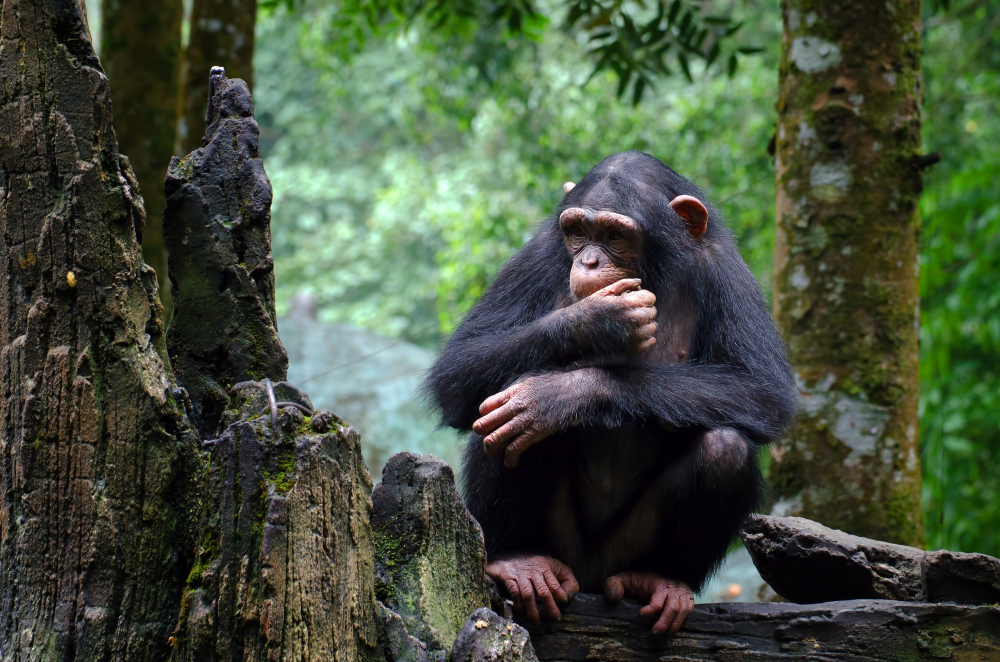
Chimpanzees are one of the closest living relatives to humans, sharing about 98–99% of our DNA. Known for their intelligence, problem-solving abilities, and complex social behaviors, these primates live in the forests and savannas of central and West Africa. Highly adaptable, chimpanzees use tools, communicate with vocalizations and gestures, and form strong social bonds within their communities, making them one of the most fascinating species in the animal kingdom.
Fun Facts About Chimpanzees
- Chimpanzees are capable of using tools, such as sticks to extract termites or leaves to drink water.
- They are extremely social and live in communities called fission-fusion societies, which can include 20–150 individuals.
- Chimpanzees can recognize themselves in mirrors, a sign of self-awareness.
- They communicate with over 60 different vocalizations, along with gestures and facial expressions.
- Baby chimpanzees cling to their mothers for up to five years while learning essential survival skills.
Scientific Information
- Common Name: Chimpanzee
- Scientific Name: Pan troglodytes
- Family: Hominidae
- Class: Mammalia
- Order: Primates
- Average Lifespan: 33–40 years in the wild, up to 50–60 years in captivity
- Height: 1–1.7 meters (3.3–5.6 feet)
- Diet: Omnivore (fruits, leaves, insects, small animals)
Chimpanzees are great apes belonging to the family Hominidae, along with gorillas, orangutans, and humans. Their advanced intelligence and social behaviors make them a key species for understanding evolution and primate behavior.
Habits & Behavior
- Chimpanzees are diurnal, active during the day and resting at night.
- They live in hierarchical communities led by an alpha male.
- Chimpanzees build nests in trees or on the ground for sleeping.
- They are highly intelligent and curious, often exploring their surroundings and solving complex problems.
- Grooming is an important social activity, helping to strengthen bonds and maintain hygiene.