European Bee-eater — A Rainbow of Color in the Summer Sky
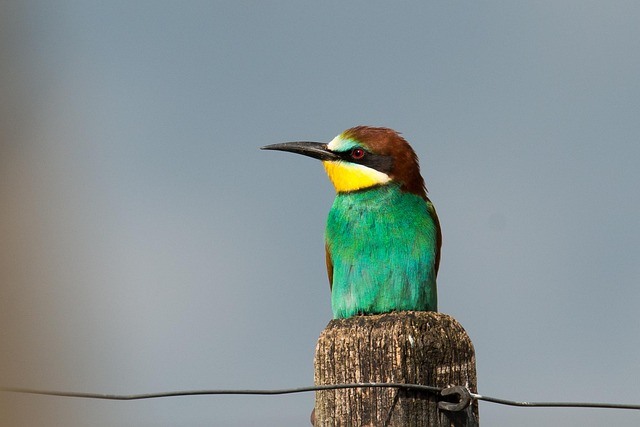
The European Bee-eater (Merops apiaster) is one of Europe’s most vividly colored birds, famous for its brilliant combination of turquoise, chestnut, golden-yellow, and black. A graceful aerial hunter, it spends much of its time catching flying insects from the air, especially bees and wasps. European Bee-eaters breed across parts of Europe and western Asia before undertaking long seasonal migrations to Africa.
With its slender body, pointed wings, elongated central tail feathers, and distinctive curved bill, the European Bee-eater is unmistakable. It is especially associated with warm, open landscapes, river valleys, sandy banks, and other areas where flying insects are abundant.
Fun Facts
- A spectacularly colorful bird: Its plumage combines turquoise, chestnut, yellow, green, and black.
- Bees are on the menu: Despite its name, it also eats wasps, dragonflies, and many other flying insects.
- It removes the sting: When catching a bee or wasp, the bird may repeatedly strike and rub the insect against a perch before swallowing it.
- It nests underground: European Bee-eaters excavate tunnels in sandy or firm vertical banks, with the nest chamber at the end.
- Both parents help: Male and female participate in incubation and feeding their young.
- A social species: They can breed in colonies and often gather in groups outside the breeding season.
- A long-distance traveler: European Bee-eaters migrate between their Eurasian breeding grounds and African wintering areas.
Scientific Information
Common Name: European Bee-eater
Scientific Name: Merops apiaster
Family: Meropidae
Order: Coraciiformes
Class: Aves
The European Bee-eater belongs to the Meropidae, or bee-eater family. Adults are approximately 27–30 cm long, with a wingspan of about 44–49 cm. Their elongated, pointed wings and streamlined body make them highly effective aerial hunters.
The species is primarily insectivorous. Bees and wasps are important prey, but its diet also includes dragonflies and other flying insects. It usually catches prey while flying, often launching from a perch and returning to the same or another perch after the capture.
European Bee-eaters generally breed during the warmer months. They excavate nesting tunnels in steep sandy banks, riverbanks, and similar exposed ground. A typical clutch contains several white eggs, and both parents share incubation and care of the young.
Habits & Behavior
European Bee-eaters are diurnal, social, and highly agile birds. They frequently sit on exposed branches, wires, or other elevated perches while watching for insects. Once prey is spotted, they launch into the air, catch it with remarkable precision, and return to a perch to consume it.
During the breeding season, they may nest in colonies along suitable sandy banks and river systems. Both members of a breeding pair help excavate the nest tunnel, incubate the eggs, and feed the chicks. Some nesting pairs may also receive assistance from other birds.
Their calls are an important part of their social life. European Bee-eaters are vocal birds, particularly when gathered in groups, and their characteristic calls are often described as lively, rolling or liquid “pruu” notes.
After the breeding season, European Bee-eaters undertake their seasonal migration toward Africa. Their spectacular combination of colorful plumage, aerial skill, social behavior, and long-distance migration makes them one of the most fascinating members of the bee-eater family.