Flicker – The Ground-Foraging Woodpecker with a Flash of Color
The Flicker is a fascinating group of woodpeckers known for its distinctive spotted plumage, energetic calls, and unusual habit of spending much of its time foraging on the ground. Unlike many woodpeckers that are commonly seen clinging to tree trunks, Flickers frequently hop across open ground searching for ants and other insects.
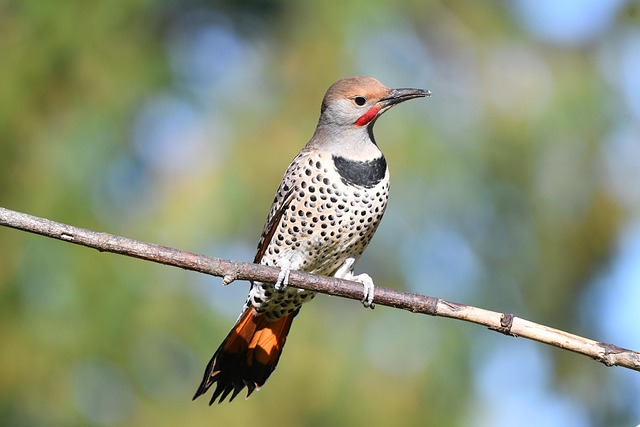
One of the best-known species is the Northern Flicker (Colaptes auratus), a medium-to-large woodpecker found across much of North America. Its brown, black-spotted body, white rump, and colorful wings and tail make it especially striking when it takes flight. Eastern birds typically show yellow in the undersides of the wings and tail, while western birds commonly show red.
Flickers are often found in open woodlands, forest edges, parks, yards, and other habitats where trees and open ground occur together. Their combination of woodpecker traits and ground-foraging behavior makes them one of the most interesting members of the woodpecker family.
Fun Facts
- A woodpecker that loves the ground: Unlike many woodpeckers, Flickers spend a great deal of time hopping across the ground searching for food.
- Ants are a favorite: Northern Flickers eat large numbers of ants and use their long tongue to reach insects underground.
- An impressive tongue: Their tongue can extend about 2 inches (5 cm) beyond the tip of the bill, helping them capture prey hidden in soil and crevices.
- A colorful surprise: Their brown plumage can hide brilliant yellow or red colors beneath the wings and tail, depending on the regional form.
- Still a true woodpecker: Flickers can climb tree trunks, excavate nest cavities, and drum on wood just like other woodpeckers.
- Excellent drummers: They use drumming and vocal calls for communication, including territorial and courtship displays.
- White eggs: Northern Flickers generally lay 5–8 white eggs in a cavity nest.
- They have their own “fencing matches”: Rival Flickers may face one another, bob their heads, move their bills, and perform elaborate displays during territorial encounters.
Scientific Information
Common Name: Flicker
Example Species: Northern Flicker
Scientific Name: Colaptes auratus
Kingdom: Animalia
Class: Aves
Order: Piciformes
Family: Picidae
Type: Woodpecker
Northern Flickers are relatively large woodpeckers, measuring approximately 28–31 cm (11–12.2 inches) in length, with a wingspan of about 42–51 cm (16.5–20.1 inches).
Their plumage is predominantly brown with distinctive black spots, bars, and crescents. A conspicuous white rump patch is particularly visible during flight. Northern Flickers also display regional differences in wing and tail coloration, with yellow-shafted forms common in the east and red-shafted forms in the west.
Flickers belong to the Picidae, the woodpecker family, and have specialized adaptations including a strong bill, stiff tail feathers, and a long tongue suited to extracting insects.
Habits & Behavior
Feeding Behavior
Flickers are unusual among woodpeckers because they frequently forage on the ground. They use their bills to dig and probe soil, particularly when searching for ants and beetles. They may also forage in trees and shrubs and occasionally catch insects in the air.
Their diet is dominated by insects during warmer months. In autumn and winter, they supplement their diet with berries, fruits, seeds, and nuts.
Social and Territorial Behavior
Flickers communicate through vocalizations, drumming, and visual displays. During breeding season, rival birds may engage in elaborate displays involving head bobbing, bill movements, wing displays, and rhythmic calls. These behaviors help establish territories and attract or interact with mates.
Nesting Behavior
Flickers are cavity-nesting birds. They commonly excavate nest cavities in dead or partly dead trees, although suitable artificial nest boxes and other structures may also be used. Northern Flickers usually lay 5–8 white eggs, with incubation lasting roughly 11–13 days according to Cornell’s life-history account. Young remain in the nest for approximately 24–27 days.
Habitat
Flickers favor habitats where trees and open ground occur together, including open woodlands, forest edges, parks, yards, and semi-open landscapes. This habitat combination provides both nesting opportunities and suitable areas for ground-based feeding.
A Remarkable Woodpecker
The Flicker demonstrates how diverse woodpecker behavior can be. Although it possesses the classic adaptations of a woodpecker, its preference for searching for ants on the ground gives it a lifestyle that is quite different from many of its relatives. Its distinctive calls, colorful flight feathers, and fascinating courtship displays make the Flicker a memorable bird for birdwatchers and nature lovers.