Flycatcher — The Agile Aerial Hunter of the Skies
The Flycatcher is a fascinating group of small to medium-sized birds best known for their incredible ability to catch flying insects in mid-air. Found in forests, gardens, woodland edges, grasslands, and even urban areas, flycatchers are agile hunters that play an important role in controlling insect populations.
The name “flycatcher” is commonly used for many different bird species and groups around the world. Many belong to the Old World flycatcher family (Muscicapidae) or the tyrant flycatcher family (Tyrannidae) of the Americas. Despite differences between species, many share a similar hunting technique: they sit quietly on a perch, watch for insects, then suddenly fly out to capture their prey before returning to the same or a nearby perch.
With their quick movements, sharp eyesight, and remarkable aerial skills, flycatchers are among nature’s most efficient insect hunters.
Fun Facts
- Masters of catching insects: Many flycatchers can grab insects in mid-air with impressive accuracy.
- Excellent eyesight: Their sharp vision helps them detect tiny insects from a considerable distance.
- Lightning-fast hunters: A flycatcher can launch from a perch almost instantly when it spots prey.
- Perch-and-pounce hunters: Many species repeatedly return to favorite branches after catching insects.
- Different groups share the name: “Flycatcher” can refer to several unrelated or distantly related groups of birds.
- Found around the world: Flycatchers occur across many regions, including Europe, Asia, Africa, Australia, and the Americas.
- Small but skillful: Their modest size does not prevent them from being highly effective predators of insects.
- Helpful to ecosystems: By eating large numbers of insects, flycatchers contribute to the balance of their ecosystems.
Scientific Information
Common Name: Flycatcher
Scientific Classification: Varies by species
Major Families: Muscicapidae and Tyrannidae, among others
Class: Aves
Order: Passeriformes
Diet: Mainly insects and other small invertebrates
Habitat: Forests, woodland, gardens, grasslands, wetlands, and open habitats
Distribution: Worldwide, depending on species
Feeding Style: Aerial insect hunting and perch-and-pounce feeding
The term “flycatcher” is not the scientific name of a single species. It is a common name applied to numerous insect-eating birds. For example, the Old World flycatchers (Muscicapidae) are found mainly across Africa, Europe, and Asia, while the tyrant flycatchers (Tyrannidae) are primarily found in the Americas.
Because there are many different flycatcher species, their appearance, migration patterns, nesting behavior, and preferred habitats can vary considerably.
Habits & Behavior
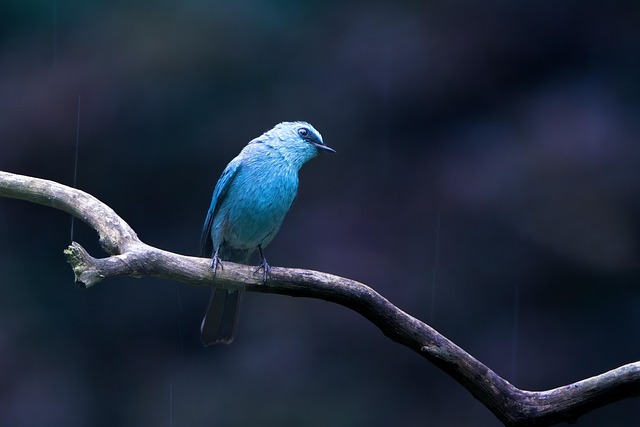
Flycatchers are generally active insect hunters that spend considerable time watching their surroundings from elevated perches. A bird may sit quietly on a branch, fence, post, or other lookout point while scanning the air for movement.
When an insect appears, the flycatcher can suddenly launch into the air, capture the prey with its bill, and return to a perch. This hunting technique is often called hawking or aerial foraging.
Many flycatchers are particularly active during the morning and evening when insects are abundant. Their diet may include flies, moths, beetles, mosquitoes, grasshoppers, and other small insects.
Some species are migratory, traveling considerable distances between breeding and wintering grounds. Others remain in the same general region throughout the year.
During the breeding season, flycatchers may become territorial and use songs or calls to attract mates and defend nesting areas. Depending on the species, nests can be built in tree cavities, holes, ledges, vegetation, or other sheltered locations.
Why Flycatchers Matter
Flycatchers are an important part of many ecosystems. By feeding on insects, they help regulate insect populations while also serving as prey for larger animals.
Their presence can also provide clues about the health of an ecosystem because many species depend on healthy forests, woodlands, and other natural habitats.
Small, fast, and remarkably precise, the Flycatcher is a perfect example of how nature can turn speed, vision, and agility into an extraordinary hunting strategy.