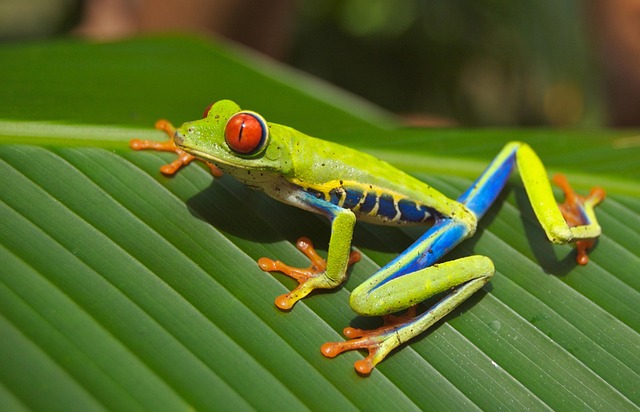
Frog – The Jumping Amphibian
Frogs play an important role in the ecosystem and are considered environmental indicators because their health reflects the quality of their surroundings. Their natural sounds are a common part of nightlife and wetland soundscapes.
Fun Facts About Frogs
- Frogs are famous for their croaking and calling sound, especially during the rainy season.
- A frog’s skin can absorb water and oxygen, helping it survives both in water and on land.
- Frogs don’t drink water like humans—they absorb it through their skin.
- Some frog species can change color to blend with their surroundings.
- Frogs use their loud calls to attract mates and mark territory.
Scientific Information of Frog
- Common Name: Frog
- Scientific Group: Amphibian
- Scientific Order: Anura
- Kingdom: Animalia
- Phylum: Chordata
- Class: Amphibia
Frogs belong to the order Anura, meaning “tailless amphibians.” They begin life as tadpoles living in water and later transform into adults through a process called metamorphosis.
Habits & Behavior of Frogs
- Frogs are mostly nocturnal and become active during the evening or night.
- They prefer wet and moist habitats such as ponds, rivers, wetlands, and forests.
- Frogs feed mainly on insects and small invertebrates, helping control pest populations.
- They communicate using croaks, ribbits, and other calls, each species having its own sound.
- During cold or dry seasons, some frogs hibernate or remain inactive to survive harsh conditions.