Silent Sovereign of the Night: The Great Horned Owl
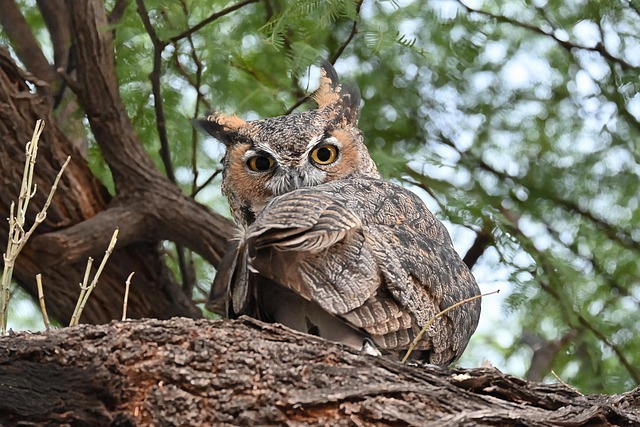
The Great Horned Owl is one of the most iconic and powerful birds of prey in the Americas. Known for its piercing yellow eyes, deep hooting calls, and distinctive “horn-like” ear tufts, this majestic owl rules the night with unmatched stealth and strength. From dense forests to open deserts and even urban parks, the Great Horned Owl thrives in a wide range of habitats, making it one of the most adaptable owls in the world.
Fun Facts
- The Great Horned Owl is often called the “tiger of the sky” because of its fierce hunting abilities.
- It can rotate its head up to 270 degrees to scan its surroundings.
- These owls have incredibly strong talons—stronger than a human hand grip!
- They are one of the earliest nesting birds, sometimes laying eggs in the middle of winter.
- Their hooting sound is deep and haunting, often used in movies to represent wilderness or mystery.
Scientific Information
- Scientific Name: Bubo virginianus
- Family: Strigidae
- Class: Aves
- Order: Strigiformes
- Wingspan: 3.3 to 4.8 feet (1–1.5 meters)
- Weight: 2 to 5.5 pounds (0.9–2.5 kg)
- Lifespan: Up to 13 years in the wild (longer in captivity)
- Habitat: Forests, deserts, wetlands, grasslands, and urban areas
- Distribution: North and South America
Habits & Behavior
The Great Horned Owl is a nocturnal hunter, meaning it is most active during the night. It relies on its exceptional hearing and night vision to locate prey in complete darkness. Its flight is nearly silent due to specialized feathers that reduce noise, allowing it to surprise its prey.
This owl is an opportunistic predator with a varied diet that includes rodents, rabbits, birds, reptiles, and even other owls. It is known for its boldness and will sometimes hunt animals larger than itself.
Great Horned Owls are generally solitary and highly territorial. They do not build their own nests but instead take over abandoned nests of other birds like hawks or crows. During breeding season, pairs form strong bonds and fiercely protect their territory.