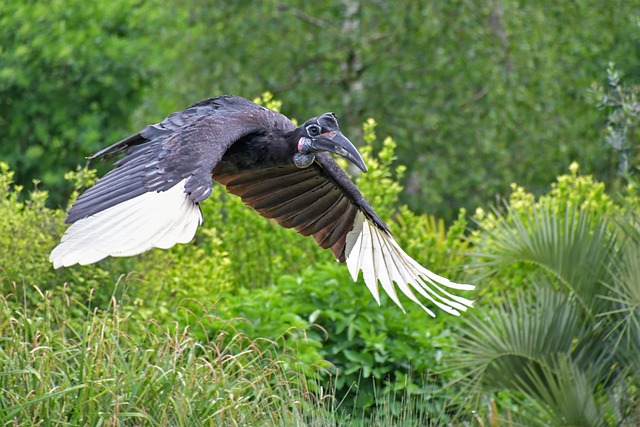
Hornbill: The Majestic Forest Bird with the Giant Bill
Hornbills are among the most fascinating and recognizable birds in the world. Known for their large curved bills and distinctive casque—a hollow structure on top of the bill—these remarkable birds inhabit the tropical forests of Africa and Asia. Their striking appearance, loud wingbeats, and unique nesting behavior have earned them a special place in many cultures and ecosystems. Often called the “gardeners of the forest,” hornbills play a vital role in maintaining healthy forests by dispersing seeds over vast distances.
Fun Facts
- Hornbills are famous for the casque on top of their bills, which can help amplify their calls and may play a role in attracting mates.
- Some hornbill species produce wingbeats so loud that they can be heard from hundreds of meters away.
- Female hornbills seal themselves inside tree cavities while nesting, leaving only a narrow slit through which the male passes food.
- Hornbills are important seed dispersers and help regenerate tropical forests.
- There are more than 60 species of hornbills found across Africa and Asia.
- The largest hornbill species can have a wingspan exceeding 1.5 meters (5 feet).
- Hornbills are often featured in folklore and traditional stories, symbolizing strength, wisdom, and loyalty.
Scientific Information
Common Name: Hornbill
Family: Bucerotidae
Order: Bucerotiformes
Scientific Family Name: Bucerotidae
Number of Species: More than 60
Size: 30–160 cm (12–63 inches), depending on species
Weight: 100 grams to over 6 kilograms
Diet: Fruits, insects, small mammals, reptiles, birds, and eggs
Habitat: Tropical rainforests, woodlands, savannas, and mangrove forests
Distribution: Africa, South Asia, Southeast Asia, and parts of the Pacific region
Lifespan: Typically 20–50 years, depending on species
Habits & Behavior
Hornbills are primarily arboreal birds, spending much of their lives in the forest canopy. Most species are active during the day and travel long distances in search of fruiting trees. Their diet consists mainly of fruits, though many species also consume insects, reptiles, and small animals.
One of the most remarkable behaviors of hornbills is their nesting strategy. When breeding, the female enters a tree cavity and seals herself inside using mud, fruit pulp, and droppings. She remains protected inside while incubating eggs and caring for young chicks. During this period, the male is responsible for delivering food through a narrow opening in the sealed nest.
Hornbills are generally monogamous and form strong pair bonds. Their loud calls and dramatic wing sounds help them communicate across dense forests. As they consume fruits and disperse seeds through their droppings, hornbills contribute significantly to forest regeneration and biodiversity.
These magnificent birds are not only important ecological partners but also some of the most extraordinary avian species on Earth.