Indian Gaur (Indian Bison): The Giant of Asia’s Forests
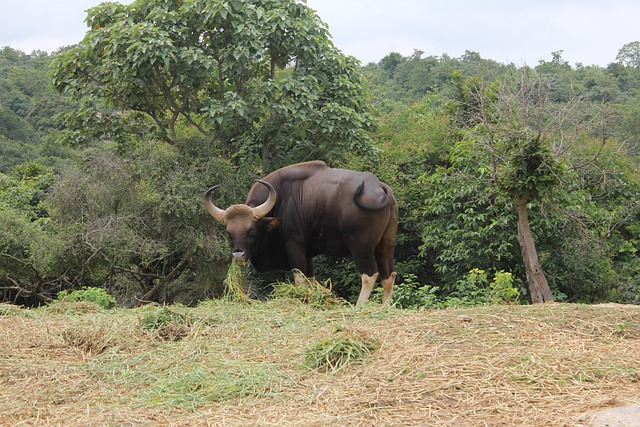
The Indian Gaur, often called the Indian Bison, is one of the most impressive wild cattle species on Earth. Known for its massive size, powerful build, and calm yet commanding presence, this magnificent animal roams the forests and grasslands of South and Southeast Asia. With its glossy dark coat, muscular body, and distinctive white “stocking” legs, the gaur is a true symbol of strength in the wild.
Despite its enormous size, the gaur is generally a shy and peaceful herbivore that prefers dense forests where it can graze safely. These animals play an important ecological role by shaping vegetation and maintaining healthy forest ecosystems.
Although the gaur is not the national animal of any country, it holds great cultural and ecological importance in India, where it is also the state animal of Goa.
Fun Facts
- Largest Wild Cattle: The gaur is the largest species of wild cattle in the world, even larger than the American bison.
- Towering Height: Adult males can stand up to 2.2 meters (7.2 feet) at the shoulder.
- Powerful Build: A mature gaur can weigh over 1,000 kg (2,200 lbs).
- Distinctive White Legs: Their white lower legs look like they are wearing socks or stockings.
- Impressive Horns: Both males and females have curved horns that can reach 80 cm (31 inches) in length.
- Forest Engineers: By grazing and moving through vegetation, gaurs help maintain healthy forest ecosystems.
- Surprisingly Fast: Despite their massive size, gaurs can run quickly when threatened.
Scientific Information
- Scientific Name: Bos gaurus
- Common Name: Indian Gaur / Indian Bison
- Animal Type: Mammal
- Family: Bovidae
- Order: Artiodactyla
- Average Height: 1.7–2.2 meters at the shoulder
- Weight: 650–1,000+ kg
- Diet: Herbivore (grasses, leaves, shoots, fruits)
- Lifespan: 20–25 years in the wild
- Habitat: Tropical forests, evergreen forests, and grasslands
- Geographic Range: South and Southeast Asia including India, Nepal, Bhutan, Thailand, and Malaysia
- Conservation Status: Vulnerable (due to habitat loss and hunting)
Habits & Behavior
Indian gaurs are social animals that usually live in small herds of 8–20 individuals, typically led by an experienced female. Adult males sometimes live alone or join herds during the breeding season.
These animals are mainly diurnal, meaning they are most active during the day, though in areas with heavy human disturbance they may become more active at dawn or dusk.
Gaurs spend much of their time grazing and browsing, feeding on grasses, bamboo, leaves, and shrubs. They often travel between forested areas and open grasslands to find food and water.
Despite their calm nature, gaurs are extremely strong and capable of defending themselves. When threatened, they can become very protective, especially mothers with calves.
During hot weather, gaurs like to rest in shaded forest areas and frequently visit water sources to drink and cool down.