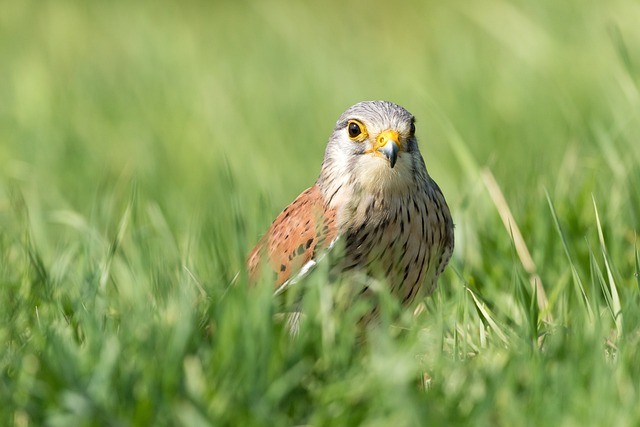
The Kestrel is one of the most fascinating birds of prey, admired for its remarkable ability to hover in mid-air while searching for food. Found across Europe, Asia, Africa, and parts of the Americas, kestrels are small but highly skilled falcons that thrive in a wide variety of habitats. Their sharp eyesight, agile flight, and colorful plumage make them a favorite among birdwatchers and wildlife photographers.
Unlike many other birds of prey that rely on speed alone, kestrels often pause in the air, beating their wings rapidly to stay almost motionless before diving onto unsuspecting prey. Their distinctive calls and graceful hunting techniques make them one of nature’s most captivating raptors.
Fun Facts
- Kestrels can hover almost motionless in the air while searching for prey.
- Their eyesight is incredibly sharp, allowing them to spot tiny animals from over 50 meters (160 feet) away.
- Kestrels can see ultraviolet (UV) light, helping them detect the urine trails left by rodents.
- They can dive quickly to capture insects, mice, voles, and small birds.
- Different kestrel species live on nearly every continent except Antarctica.
- Many kestrels have adapted well to cities, nesting on tall buildings, church towers, and bridges.
- Male and female kestrels often have different plumage colors, making them easy to distinguish.
- A single kestrel can help farmers by catching hundreds of rodents every year.
Scientific Information
Common Name: Kestrel
Scientific Genus: Falco
Family: Falconidae
Order: Falconiformes
Class: Aves
Diet: Carnivore
Primary Food: Mice, voles, insects, small birds, reptiles, frogs, and occasionally bats.
Average Length: 28–39 cm (11–15 inches)
Wingspan: 58–82 cm (23–32 inches)
Weight: Approximately 90–300 grams, depending on the species.
Lifespan:
- Wild: 5–10 years on average
- Some individuals can live over 15 years under favorable conditions.
Conservation Status: Most kestrel species are classified as Least Concern, although some local populations are declining because of habitat loss, pesticide use, and reduced prey availability.
Habits & Behavior
Kestrels are daytime hunters, meaning they are active during daylight hours. Their most famous behavior is “hover hunting,” where they face into the wind and rapidly beat their wings to remain suspended in one spot while scanning the ground below.
These birds prefer open countryside, grasslands, farmland, deserts, woodland edges, and even urban areas where prey is abundant. They usually hunt alone and rely on exceptional vision rather than smell or hearing.
Kestrels are territorial during the breeding season and defend their nesting sites from rivals. Instead of building their own nests, they often use abandoned crow nests, tree cavities, cliff ledges, or holes in buildings.
Their diet is highly adaptable. While rodents are a favorite food, kestrels readily catch grasshoppers, beetles, lizards, frogs, and small birds depending on seasonal availability.
Although they are powerful predators, kestrels themselves may become prey for larger hawks, eagles, owls, and mammals. Their agility and quick flight help them escape many threats.
Kestrels communicate using a series of sharp, high-pitched calls, especially during courtship, territorial disputes, and when alerting their mate to danger. Their distinctive vocalizations are an important part of their social behavior and can often be heard before the bird is seen.