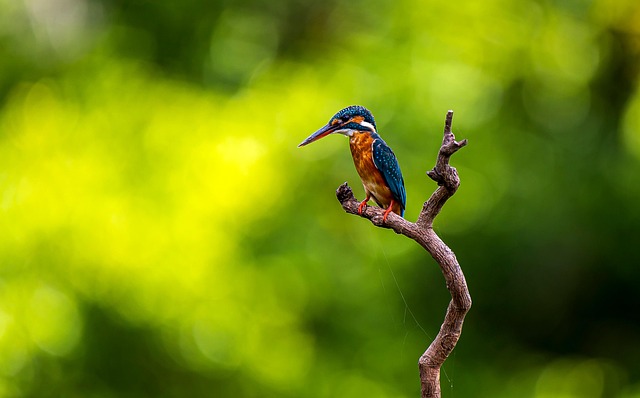
Kingfisher: The Dazzling Jewel of Rivers and Skies
The Kingfisher is one of nature’s most stunning birds, known for its vibrant colors and incredible fishing skills. Often seen perched silently near rivers, lakes, or wetlands, this small yet powerful hunter dives with remarkable precision to catch its prey. With over 90 species found across the world, kingfishers are admired not only for their beauty but also for their speed, agility, and unique lifestyle.
Fun Facts
- Kingfishers can dive at lightning speed, hitting the water at up to 40 km/h!
- They have excellent vision and can adjust for light refraction in water, making them expert hunters.
- Not all kingfishers eat fish—some species prefer insects, frogs, and even small reptiles.
- Their bright feathers are not due to pigments but to light reflection from microscopic structures in their feathers.
- A group of kingfishers is sometimes called a “concentration” or “realm.”
Scientific Information
- Scientific Family: Alcedinidae
- Order: Coraciiformes
- Average Size: 10–45 cm (varies by species)
- Weight: 10–170 grams
- Lifespan: 6–10 years (in the wild)
- Habitat: Rivers, lakes, wetlands, forests, and coastal regions
- Diet: Fish, insects, amphibians, crustaceans
Some well-known species include the Common Kingfisher, the Belted Kingfisher, and the Pied Kingfisher.
Habits & Behavior
Kingfishers are mostly solitary and highly territorial birds. They prefer quiet environments where they can hunt undisturbed. Perching on a branch or hovering above water, they carefully scan for movement before making a swift dive to catch prey.
They are known for their distinctive call—sharp, high-pitched whistles often heard before the bird is seen. Kingfishers build their nests by digging tunnels into riverbanks or soft ground, where they lay their eggs safely away from predators.
These birds are also known for their unique hunting technique. After catching a fish, they often return to a perch and repeatedly hit the prey against a branch to stun or kill it before swallowing.