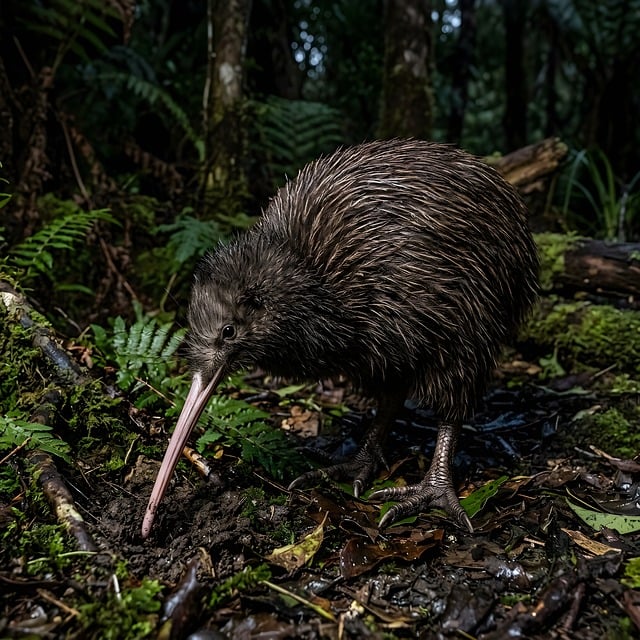
Kiwi: New Zealand’s Flightless Bird of Wonder
The Kiwi is one of the most unique and fascinating birds in the world. Native to New Zealand, this small, flightless bird is famous for its long beak, shaggy feathers, and nocturnal lifestyle. Unlike most birds, Kiwis rely heavily on their sense of smell to find food, making them truly exceptional among avian species. As a national symbol of New Zealand, the Kiwi holds a special place in both nature and culture.
Fun Facts
- The Kiwi is one of the few birds with nostrils located at the tip of its beak.
- Kiwis cannot fly, but they have strong legs that help them run and dig.
- They are mostly active at night, making them nocturnal birds.
- A Kiwi egg is enormous compared to the bird’s body size and can weigh up to 20% of the female’s weight.
- Kiwis have whisker-like feathers around their beaks that help them navigate in the dark.
- They have a highly developed sense of smell, unusual for birds.
- The people of New Zealand are often nicknamed “Kiwis” after this iconic bird.
- Kiwis can live for 25 to 50 years in the wild and protected environments.
Scientific Information
| Category | Information |
| Common Name | Kiwi |
| Scientific Name | Apteryx spp. |
| Family | Apterygidae |
| Order | Apterygiformes |
| Class | Aves |
| Diet | Insects, worms, spiders, fruits, seeds, and small invertebrates |
| Length | 35–65 cm (14–26 inches) |
| Weight | 1.2–3.5 kg (2.6–7.7 lbs) |
| Lifespan | 25–50 years |
| Habitat | Forests, scrublands, and grasslands |
| Distribution | New Zealand |
| Conservation Status | Varies by species, from Vulnerable to Near Threatened |
Habits & Behavior
Kiwis are solitary and territorial birds that spend much of their time foraging on the forest floor. Their long, sensitive beaks allow them to probe deep into the soil to locate insects, worms, and other small creatures hidden underground.
Unlike most birds, Kiwis have a remarkable sense of smell and hearing, which they use to navigate and hunt during the night. They typically rest in burrows, hollow logs, or dense vegetation during the day and become active after sunset.
Kiwis form strong pair bonds, and many pairs remain together for life. During the breeding season, the female lays one of the largest eggs relative to body size of any bird species. In some species, the male is primarily responsible for incubating the egg.
These shy birds communicate through whistles, snorts, and calls, especially at night. Although they cannot fly, their powerful legs make them agile runners and effective diggers.
The Kiwi’s unusual appearance, unique adaptations, and importance to New Zealand’s natural heritage make it one of the world’s most extraordinary birds.