Koala: The Sleepy Symbol of Australia’s Eucalyptus Forests
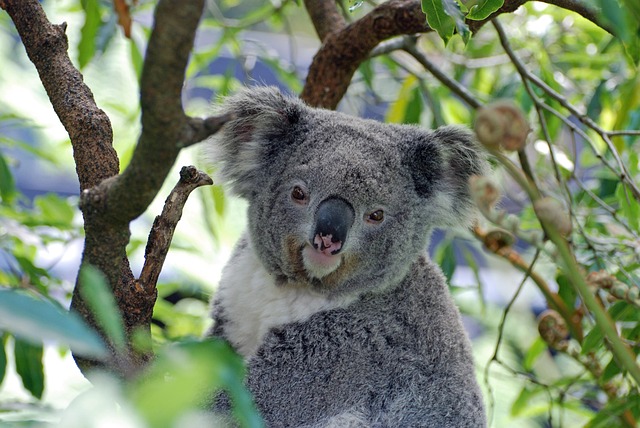
Koalas are one of the most iconic and beloved marsupials in the world, instantly recognizable by their fluffy ears, round nose, and gentle, sleepy expression. Native to the eucalyptus forests of Australia, these tree-dwelling mammals spend most of their lives perched in trees, feeding, resting, and conserving energy. Despite their cuddly appearance, koalas are highly specialized animals with fascinating adaptations that allow them to survive in their unique habitat.
Koalas are not bears, though they are often mistakenly called “koala bears.” They are marsupials, meaning females carry their babies (called joeys) in pouches until they are old enough to venture out. These sleepy yet charming creatures have become a symbol of Australia’s wildlife and a favorite among nature lovers around the globe.
Scientific Information
- Common Name: Koala
- Scientific Name: Phascolarctos cinereus
- Family: Phascolarctidae
- Order: Diprotodontia
- Class: Mammalia
- Average Size: 24–33 inches (60–85 cm) in length
- Weight: 9–33 pounds (4–15 kg), males usually larger
- Lifespan: 13–18 years in the wild; up to 20 years in captivity
Distribution: Koalas are native to eastern and southeastern Australia, inhabiting eucalyptus forests and woodlands.
Diet Specialization: Koalas feed almost exclusively on eucalyptus leaves, which are tough, fibrous, and low in nutrition but high in water content.
Fun Facts
- Sleepy Lifestyle: Koalas can sleep 18–22 hours a day to conserve energy from their low-calorie diet.
- Unique Fingerprints: Koalas have fingerprints that are remarkably similar to humans, even under a microscope.
- Vocal Communicators: Despite their quiet appearance, koalas make deep grunting and bellowing sounds, especially during mating season.
- Pouch Life: Baby koalas, called joeys, stay in their mother’s pouch for about 6 months before gradually exploring the outside world.
- Slow Digesters: Their specialized digestive system ferments eucalyptus leaves to extract as many nutrients as possible.
- Cultural Icon: Koalas are often used in Australian media and tourism as a symbol of wildlife and natural beauty.
Habits & Behavior
Koalas are fascinating marsupials with unique adaptations for tree-dwelling life:
- Arboreal Lifestyle: Koalas live almost exclusively in trees, rarely descending to the ground except to move between territories.
- Territorial Behavior: Males have larger home ranges and use vocalizations to mark territory and attract mates.
- Diet: They eat eucalyptus leaves exclusively, consuming up to 2–4 pounds (1–2 kg) daily.
- Solitary Animals: Koalas are mostly solitary except during mating or when mothers care for their joeys.
- Slow Metabolism: Their low-energy lifestyle helps them survive on a nutrient-poor diet.
- Nocturnal Activity: Koalas are mostly active at night, foraging and moving quietly among trees.