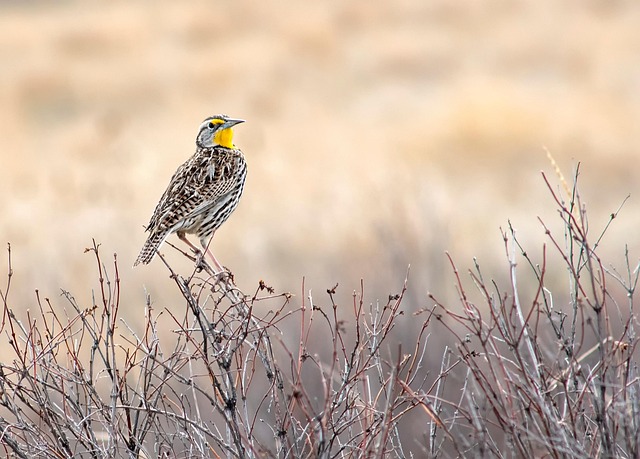
Meadowlark: The Golden Songbird of the Open Grasslands
The Meadowlark is a beautiful and melodious songbird famous for its bright yellow breast, bold black markings, and enchanting songs. Despite its name, the Meadowlark is not actually a lark. It belongs to the blackbird family, Icteridae, and is closely related to birds such as blackbirds, orioles, and grackles.
Meadowlarks are primarily found across North America, where they inhabit open grasslands, meadows, pastures, prairies, agricultural fields, and other open landscapes. Their cheerful songs are an iconic part of the sounds of the American countryside.
Two of the best-known species are the Eastern Meadowlark (Sturnella magna) and Western Meadowlark (Sturnella neglecta). Although they look remarkably similar, their songs are quite different.
With their striking appearance and beautiful voices, meadowlarks are among the most beloved birds of open country.
Fun Facts
- Not a true lark: Despite its common name, the Meadowlark belongs to the blackbird family rather than the lark family.
- Bright yellow breast: Its yellow underparts are decorated with a distinctive black V-shaped mark.
- Beautiful singer: Meadowlarks are famous for their clear, flute-like songs.
- Grassland specialist: They prefer open habitats rather than dense forests.
- Helpful insect hunter: During the breeding season, insects and other invertebrates make up an important part of their diet.
- Ground nesters: Meadowlarks typically build their nests on or very close to the ground.
- Excellent camouflage: Their brown and streaked backs help them blend into grasses and vegetation.
- Two famous species: Eastern Meadowlark and Western Meadowlark are the most widely recognized meadowlark species.
Scientific Information
Common Name: Meadowlark
Family: Icteridae
Order: Passeriformes
Class: Aves
The name “Meadowlark” generally refers to several closely related species of grassland birds. The two most familiar species are:
Eastern Meadowlark
Scientific Name: Sturnella magna
Western Meadowlark
Scientific Name: Sturnella neglecta
Meadowlarks are medium-sized songbirds with relatively long, pointed bills and strong legs suited to walking and foraging on the ground. Their upperparts are generally brown and heavily patterned, while their underparts are yellow, with the characteristic black V-shaped breast marking.
Their diet consists of insects, larvae, earthworms, spiders, seeds, and grains. Their feeding habits change depending on season and food availability.
Habits & Behavior
Song and Communication
The Meadowlark is particularly famous for its vocalizations. Males sing to attract mates and defend their territories. Their songs are often delivered from exposed perches such as fence posts, bushes, or tall vegetation.
Eastern and Western Meadowlarks have noticeably different songs, making their vocalizations useful for identifying them in the field.
Feeding Behavior
Meadowlarks spend considerable time walking through grasslands while searching for food. They may probe the soil with their bills or pick insects from vegetation.
During warmer months, insects and other small invertebrates provide important sources of protein. Seeds and grains become increasingly important at other times of the year.
Nesting
Unlike many songbirds that build nests in trees, meadowlarks generally nest on the ground. The female creates a cup-shaped nest using grasses and other plant material.
The nest may be concealed among tall grass, making it difficult for predators and humans to notice.
Breeding Behavior
During the breeding season, males establish territories and use their songs to attract females and discourage competing males. Courtship can involve singing, displaying, and other behaviors.
After eggs are laid, the female generally takes the primary role in incubating them, while the male may help defend the territory and provide food.
Daily Activity
Meadowlarks are primarily diurnal, meaning they are active during daylight hours. They spend much of their day feeding, singing, maintaining territories, and caring for their young.
Habitat and Conservation
Meadowlarks depend heavily on open grassland habitats. Unfortunately, the conversion of natural grasslands into intensive agriculture, urban development, and other land-use changes can reduce suitable habitat.
Protecting native grasslands, meadows, and traditional pastureland is therefore important for maintaining healthy meadowlark populations.
Why Meadowlarks Are Special
The Meadowlark combines beautiful colors, fascinating behavior, and an unforgettable song. Its cheerful voice rising from an open meadow is one of the classic sounds of North American grasslands.
Whether perched on a fence post or walking through tall grass searching for insects, the Meadowlark is a wonderful example of how birds have adapted to life in open landscapes.