Myna Bird Sound | Natural Calls & Chirping
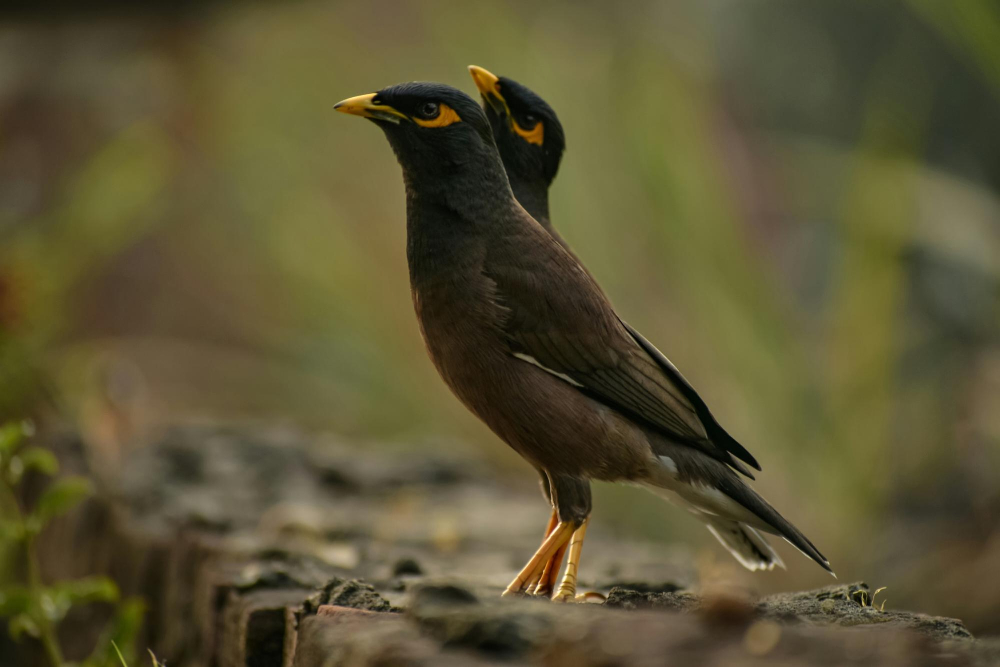
The Myna is one of the most familiar and intelligent birds across South Asia. Known for its bold personality, loud calls, and close association with human settlements, the myna thrives in cities, villages, farms, and forests alike. With its sharp eyes, confident walk, and ability to mimic sounds, the myna is not just a common bird—it is a fascinating symbol of adaptability and intelligence in the bird world.
Fun Facts
- Excellent mimics: Mynas can copy human speech, phone ringtones, and other bird calls when trained.
- Fearless around people: Unlike many shy birds, mynas often walk near humans in markets, streets, and gardens.
- Social birds: They are frequently seen in pairs or small groups, communicating with constant chatter.
- Problem solvers: Mynas are considered one of the most intelligent birds, capable of learning routines and recognizing food sources.
- Famous species: The Common Myna is so adaptable that it has spread to many countries around the world.
Scientific Information
- Common Name: Myna (or Mynah)
- Popular Species: Common Myna
- Scientific Name: Acridotheres tristis
- Family: Sturnidae (Starling family)
- Order: Passeriformes
- Size: About 23–26 cm in length
- Wingspan: Approximately 40–46 cm
- Diet: Omnivorous – insects, fruits, grains, scraps, small reptiles, and human food waste
- Habitat: Cities, villages, farmland, gardens, forests, and open landscapes
- Geographic Range: South Asia; introduced to parts of the Middle East, Africa, Australia, and the Pacific
Habits & Behavior
- Feeding Behavior: Mynas are opportunistic feeders. They forage on the ground, in trees, and even near homes, eating insects, fruits, grains, and leftover food. This makes them helpful in pest control but also very dependent on human environments.
- Vocal Nature: They are noisy and expressive birds. Mynas use a wide range of calls to communicate with partners, warn of danger, and defend territory.
- Nesting: Mynas build nests in tree holes, building crevices, roofs, and other sheltered spaces. They often use grass, feathers, paper, and even plastic.
- Territorial Instinct: During breeding season, they become highly protective of their nests and will chase away other birds and intruders.
- Adaptability: One of the myna’s strongest traits is its ability to survive in almost any environment—urban or rural—making it one of the most successful bird species in the world.