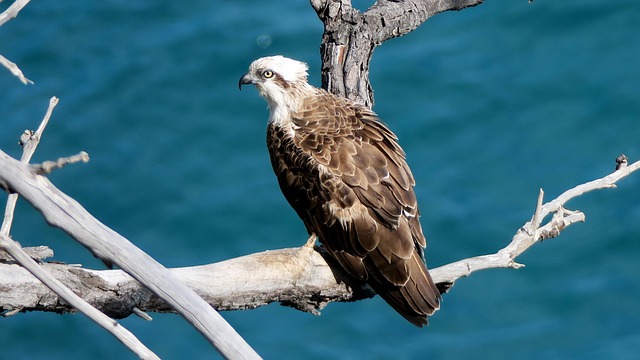
Osprey: The Master Fisher of the Skies
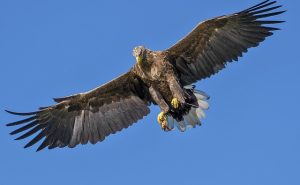
The Osprey is a powerful and elegant bird of prey known for its incredible fishing skills. Found near lakes, rivers, and coastal waters across the world, this raptor is specially adapted to catch fish with remarkable precision. Often called the “fish hawk,” the Osprey is a symbol of strength, focus, and survival in the wild. With its sharp eyesight, strong talons, and unique diving ability, it stands out as one of nature’s most skilled hunters.
Fun Facts
- Ospreys are found on every continent except Antarctica.
- They are almost exclusively fish eaters—over 99% of their diet is fish.
- Their feet are specially designed with reversible outer toes to grip slippery fish.
- Ospreys can dive into water feet-first from heights of up to 30 meters.
- They have excellent vision and can spot fish from high in the sky.
- Ospreys often build large nests on poles, trees, or cliffs, and reuse them for years.
- They can shake water off their feathers quickly after diving due to their oily plumage.
- The Osprey is sometimes called the “Sea Hawk” or “Fish Eagle.”
Scientific Information
| Category | Information |
| Common Name | Osprey |
| Scientific Name | Pandion haliaetus |
| Family | Pandionidae |
| Order | Accipitriformes |
| Habitat | Rivers, lakes, coastal waters, wetlands |
| Diet | Primarily fish |
| Size | 50–66 cm |
| Wingspan | 127–180 cm |
| Weight | 1.0–2.0 kg |
| Lifespan | 15–20 years (longer in protected environments) |
| Conservation Status | Least Concern (IUCN) |
Habits & Behavior
Ospreys are highly specialized birds of prey that depend almost entirely on fish for survival. They are expert hunters, hovering above water before diving feet-first to catch prey with their sharp, curved talons. Their reversible outer toes help them hold slippery fish securely while flying.
These birds are usually solitary or found in breeding pairs. During the breeding season, Ospreys build large nests made of sticks, often placed on tall trees, cliffs, or even man-made structures like utility poles. They often return to the same nesting site year after year, expanding it over time.
Ospreys are migratory in many regions, traveling thousands of kilometers between breeding and wintering grounds. They are strong flyers and can cross oceans during migration.
Communication between Ospreys includes whistles, chirps, and alarm calls, especially around nesting areas. Both parents take part in raising chicks, with males mainly responsible for hunting and females caring for the nest.
Their remarkable hunting technique and global distribution make the Osprey one of the most fascinating birds of prey in the natural world.