Soothing Owl Sounds | Night Forest Ambience
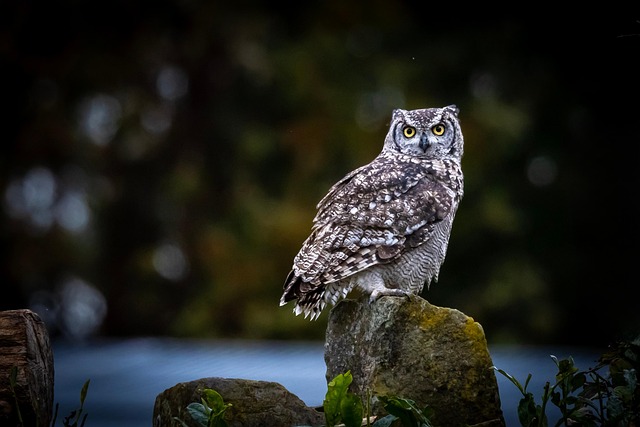
As silent guardians of the night, owls serve as crucial natural pest controllers, their presence a vital thread in the ecological tapestry. Their enigmatic vocalizations—from haunting hoots to piercing shrieks—define the auditory character of forests after dark, securing their place as treasured recordings among nature sound enthusiasts.
Fun Facts About Owls
• The iconic hoot of an owl is not merely a call but a signature sound of the nocturnal world.
• With a breathtaking flexibility that defies avian limits, an owl can swivel its head through a 270-degree arc, granting it a near-comprehensive field of view.
• Specialized fringed feathers enable owls to achieve a ghostly, silent flight, allowing them to descend upon prey undetected.
• The owl’s repertoire extends far beyond the hoot, encompassing an array of species-specific screeches, whistles, and hisses.
• Equipped with eyes exquisitely sensitive to minimal light, owls master the art of hunting in profound darkness.
Scientific Information of Owl
• Common Name: Owl
• Scientific Order: Strigiformes
• Kingdom: Animalia
• Phylum: Chordata
• Class: Aves
As members of the order Strigiformes, owls are a globally distributed order of raptors, absent only from Antarctica, and exquisitely evolved for a life ruled by the moon.
Habits & Behavior of Owls
• Owls are sovereigns of the dusk, reigniting the hunter’s instinct as daylight fades.
• Their hunting strategy is a masterclass in stealth and precision, combining near-silent flight with razor-sharp auditory pinpointing to capture rodents, insects, and other small creatures.
• Solitary by nature, owls typically seek company only for the imperative of reproduction.
• Communication weaves through their solitary lives via complex vocalizations and deliberate body language, often used to declare territorial boundaries.
• They seek refuge for raising young in secluded sanctuaries like tree cavities, rocky crevices, or the husks of abandoned human structures.