Pied Kingfisher: The Hovering Hunter of Crystal Waters
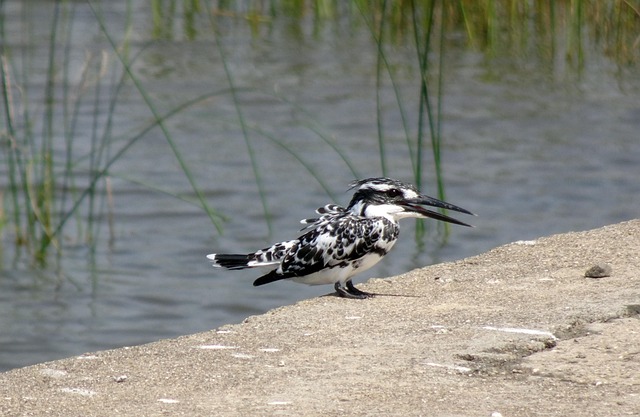
The Pied Kingfisher is one of nature’s most fascinating and skillful birds, admired for its striking black-and-white plumage and extraordinary hunting technique. Found near rivers, lakes, and coastal waters across Africa and Asia, this bird stands out for its ability to hover mid-air before plunging into the water to catch fish. Unlike many other kingfishers, the Pied Kingfisher thrives in open habitats, making it easier to observe its incredible aerial skills. Its sharp calls and energetic movements bring life to wetlands, making it a favorite among bird watchers and nature enthusiasts.
Fun Facts
- The Pied Kingfisher is one of the few birds capable of true hovering, similar to a hummingbird.
- It can spot fish from high above and dive with perfect precision.
- These birds often live in small social groups, unlike many solitary kingfishers.
- Its bold black-and-white coloring helps it blend with shimmering water reflections.
- They nest in burrows dug into sandy riverbanks, sometimes forming colonies.
- It is widely distributed across Africa and South Asia, making it one of the most commonkingfishers.
Scientific Information
- Scientific Name: Ceryle rudis
- Family: Alcedinidae
- Order: Coraciiformes
- Class: Aves
- Average Length: 25–30 cm
- Wingspan: 38–42 cm
- Weight: 70–100 grams
- Diet: Primarily fish, but also insects and small aquatic creatures
- Lifespan: Around 6–10 years in the wild
Habits & Behavior
The Pied Kingfisher is a master hunter and highly active bird. It is best known for its unique hunting style—hovering above water while scanning for prey. Once it detects a fish, it dives headfirst with remarkable speed and accuracy, often emerging with a successful catch.
These birds are diurnal, meaning they are most active during the day. They frequently perch on branches, poles, or rocks near water bodies, constantly watching for movement below.
Unlike many other kingfishers, Pied Kingfishers are social and cooperative breeders. Younger birds sometimes assist parents in feeding and caring for chicks, which is a rare and fascinating behavior in the bird world.
During breeding season, they dig long horizontal tunnels into riverbanks where they lay eggs. Both parents share responsibilities, from incubation to feeding the young.
Their calls are sharp, repetitive, and often heard before the bird is seen, adding a lively soundtrack to their watery habitats.